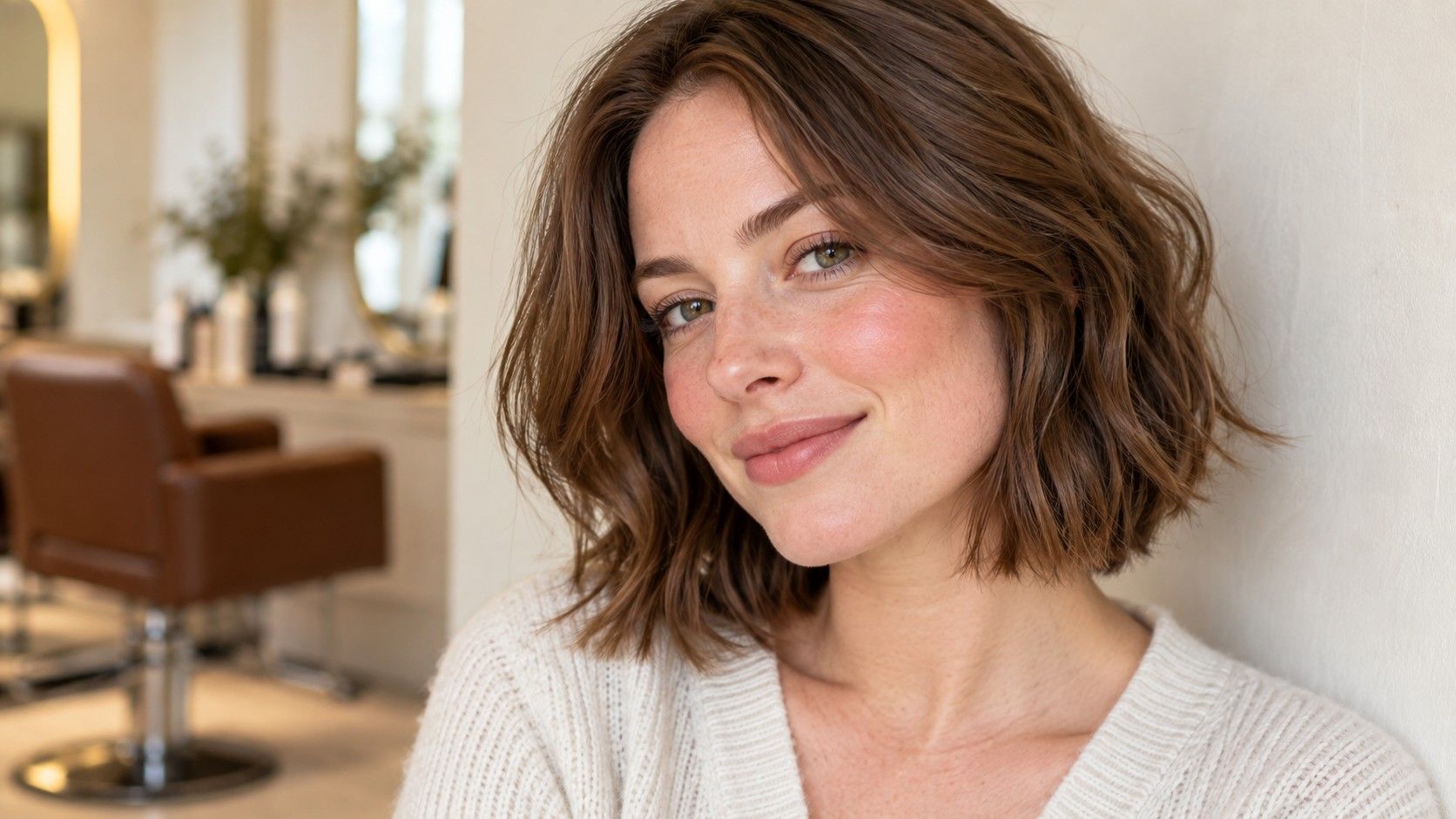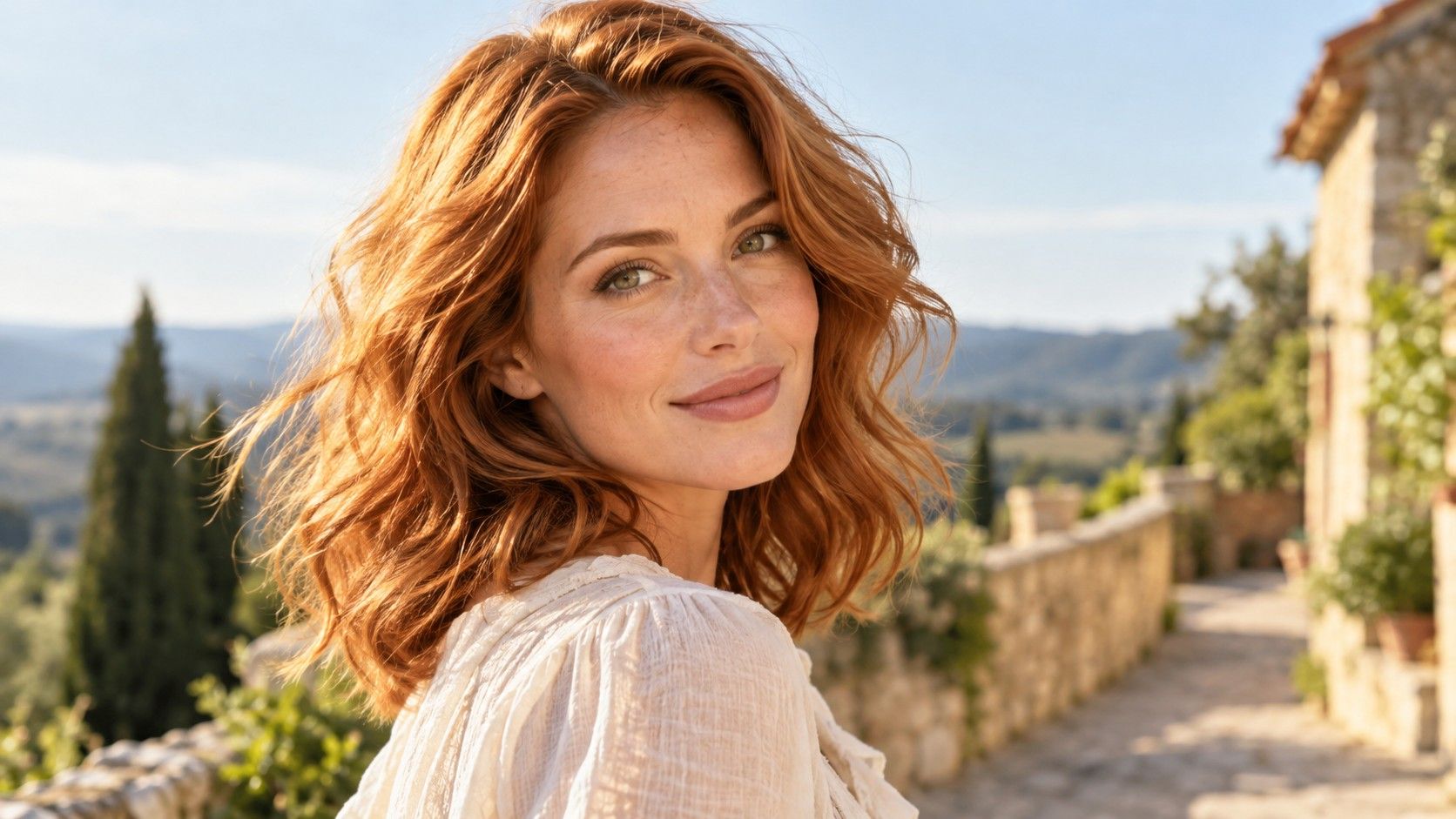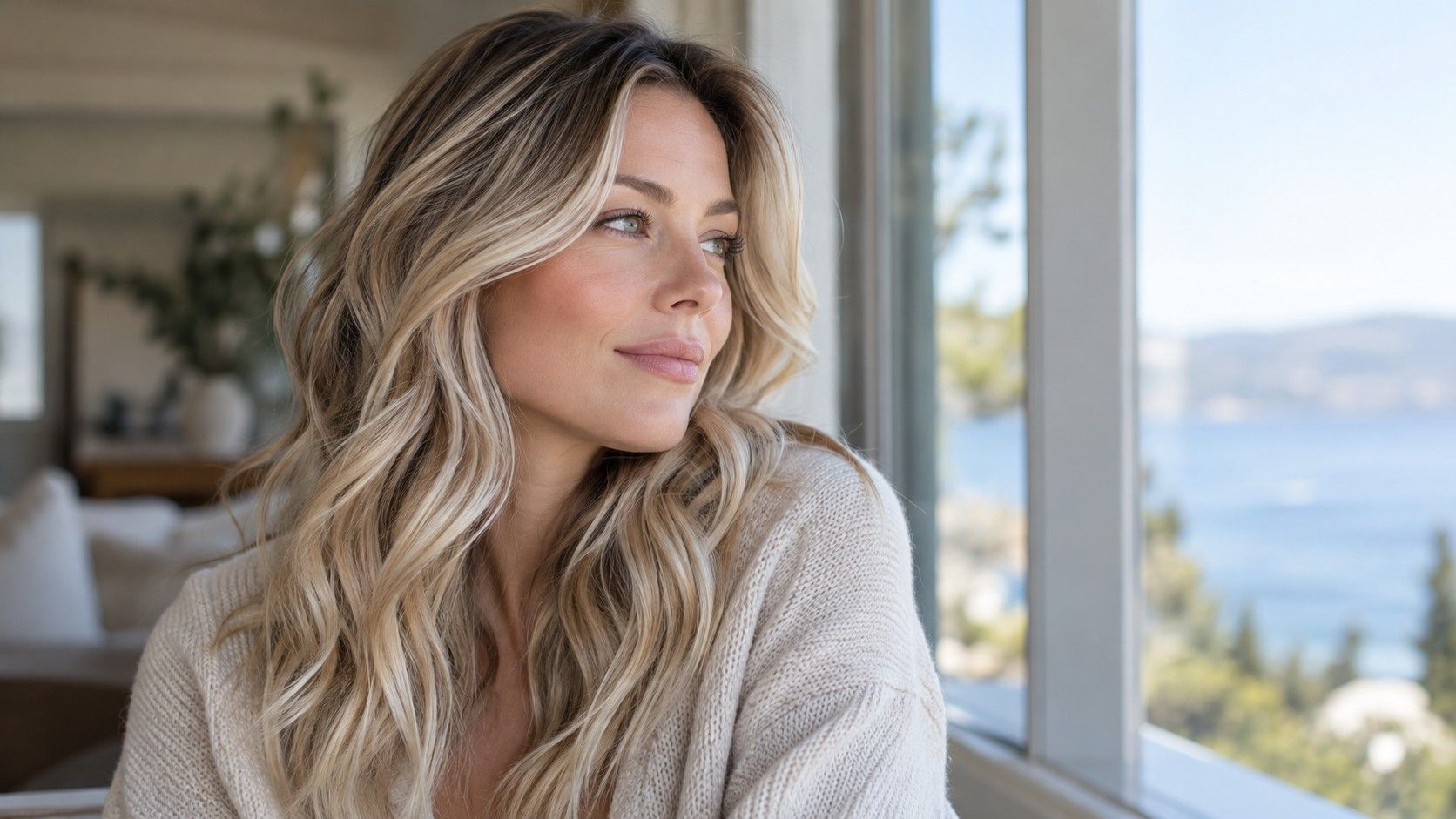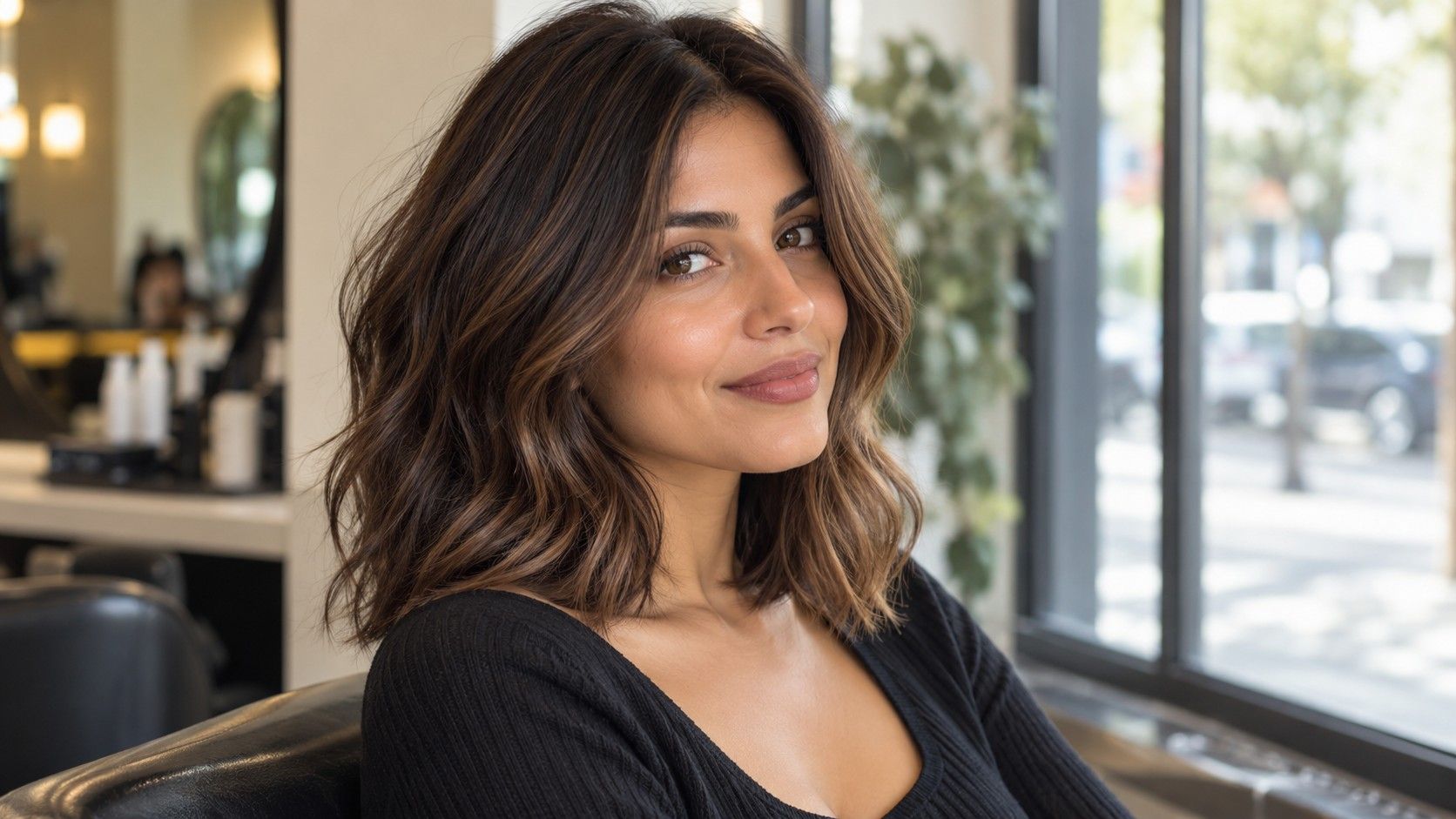
Brown can look beautifully balanced against olive skin, yet two swatches labelled brunette may give very different results. The useful choice is between specific depths and amounts of warmth, rather than a rule that every olive complexion needs ash. Compare the hair beside your face, in ordinary daylight, before committing to a full change.
When olive skin looks different in every photograph
Olive describes a complexion that may have a greenish or muted cast, but it does not settle every other colour question. Skin can be light or deep, and its overall impression can lean warmer, cooler or quite neutral. A foundation label, a wrist-vein test or one flattering holiday photograph cannot reliably choose a brown hair shade for you. Start with what you can actually compare: your face, your natural roots and two brown references photographed in similar light.
Use a window with indirect daylight and switch off nearby yellow lamps. Wear a quiet grey or off-white top and look at the neck as well as the cheeks. A flushed cheek can make the rest of the skin seem greener by contrast. If makeup is part of your usual routine, make one comparison with your normal makeup and another without it. Neither is the correct version of you; they answer different questions about how the colour will work during the week.
Keep the phone camera in one position. Automatic exposure can brighten the face when you hold a dark swatch nearby, producing an improvement that disappears in the mirror. Screens also change colour. A virtual brown preview is useful for judging the outline and approximate depth, but a real swatch near the jaw is a better final check for subtle gold or grey.
If you want the safest change from your natural brown
Begin with depth close to the roots, then compare a neutral brown with a gently warm version at that same depth. Changing one variable makes the result easier to judge. A medium neutral brunette can be a helpful reference point even if you eventually choose something warmer or darker. Ask whether the face looks clear, whether shadows around the mouth seem stronger and whether the hair appears to belong with the eyebrows.
Shade names are unreliable across brands and photographs. Mushroom may mean a soft taupe brown in one salon image and a distinctly grey result in another. Chocolate can describe anything from neutral dark brown to a red-rich brunette. Bring images showing the result you want rather than asking for a name alone. Include a picture of the colour in shade, because a sunlit highlight can hide how dark the rest of the head will look indoors.
For a first experiment, a small face-framing change or a subtle shift within your existing depth may be enough to answer the warm-or-cool question. Whether a temporary or demi-permanent colour is suitable depends on your hair and the result you need; those labels do not promise an effortless removal. Have the colourist explain how the proposed service behaves on your existing lengths.
When ash brown makes the face look flat
Ash brown is often suggested as the best brown hair color for olive skin because it limits obvious orange or red. That can work, particularly when strong warmth overwhelms the complexion. But a very grey brunette can also echo muted skin and leave the whole face looking subdued. If your eyes seem duller and the area around the lips appears grey, compare a neutral brown before deciding you need still more ash.
Try a neutral espresso at a darker depth or a beige-brown reference at a lighter one. These are visual directions rather than fixed colour formulas. The aim is to remove an unwanted orange impression without draining all warmth from the hair. Look especially at the strands beside the temples, where colour meets skin directly. A little warmth through the ends may be pleasant while the same warmth in a solid fringe feels excessive.
Cool colour also has to work with the base underneath. Previously lightened strands may absorb a new tone unevenly, and a faded warm brown may require a different approach from natural dark roots. A strand test can reveal more than a mood board here. Ask to see the expected result on your hair, including whether some warmth is likely to show as the colour wears.
When you love chestnut but dislike an orange cast
Chestnut, soft chocolate and restrained caramel can add dimension to olive skin, especially when very cool shades feel severe. The question is how much warmth you enjoy. A brown with a slight golden reflection is a different proposition from a bright copper-brown, even if both are described as warm. Put those references side by side and identify which part you like: the brown base, the brighter pieces or the overall glow.
If your complexion looks yellow beside a strongly golden swatch, lower the saturation before abandoning warm brown entirely. A muted neutral-warm brown may be more comfortable than honey or copper. Conversely, if your face looks lively beside chestnut and tired beside a flat taupe, there is no reason to choose ash solely because a chart says olive should be cool. The mirror comparison deserves more weight than a category.
Placement can keep the experiment manageable. Warm ribbons away from the immediate hairline give a different effect from a full warm frame around the face. Ask for reference photos with a similar parting and haircut to yours. Long curled hair distributes highlights differently from a straight jaw-length bob, and a result that looks delicate on one can read as a stripe on the other.
If dark espresso feels polished in photos but heavy in person
Deep brown creates a strong frame. With dark eyebrows and eyes, that frame may feel coherent and expressive; with a softer overall contrast, it may dominate the face. Check a dark reference at conversational distance, not just in a tight selfie. Pay attention to the outline around the forehead and jaw. You are deciding whether you enjoy that contrast, rather than testing whether your skin is allowed to wear a dark colour.
Compare dark espresso with a slightly lighter brunette before making the darkest choice. A small difference in depth can soften the effect without changing the general brown direction. If your natural hair is lighter, consider the line that will appear at regrowth. If it is darker, a lighter brown may involve lightening and a maintenance plan. Neither situation can be judged from the finished reference photo alone.
Dimension is another option, but it should have a job. A few softer pieces around the face can break a solid dark outline; bright ends will mainly change the impression lower down. Keep a photograph of the version you rejected as well as the favourite. Being able to say “this is too dark at the hairline” communicates much more than asking for a flattering brunette.
Before the appointment, choose the brown you can keep
Bring three things to the consultation: a daylight photograph of your current hair, one preferred brown reference and one example of the tone you do not want. Explain any old permanent dye, lightener or colour-removing service on the lengths. A dark-looking section may still contain an old lightened base beneath later colour. That history affects what is realistic in one appointment and how even the result may be.
Ask what will change as the colour fades. Will warm reflections return, will the face-framing pieces need separate attention, and how obvious will the roots become? Set a realistic interval for salon visits before agreeing to a shade. There is little benefit in choosing a delicate cool brown that requires a routine you already know you will not maintain. Your everyday washing and heat-styling habits belong in this conversation too.
The shortlist can be simple: neutral medium brown for a restrained change, deeper espresso for a stronger frame, or a muted chestnut for visible warmth. Keep only the options that looked convincing beside your actual face. Once depth, warmth and upkeep are clear, choosing brown for olive skin becomes a specific decision you can explain at the chair, rather than a search for a universal winning shade.