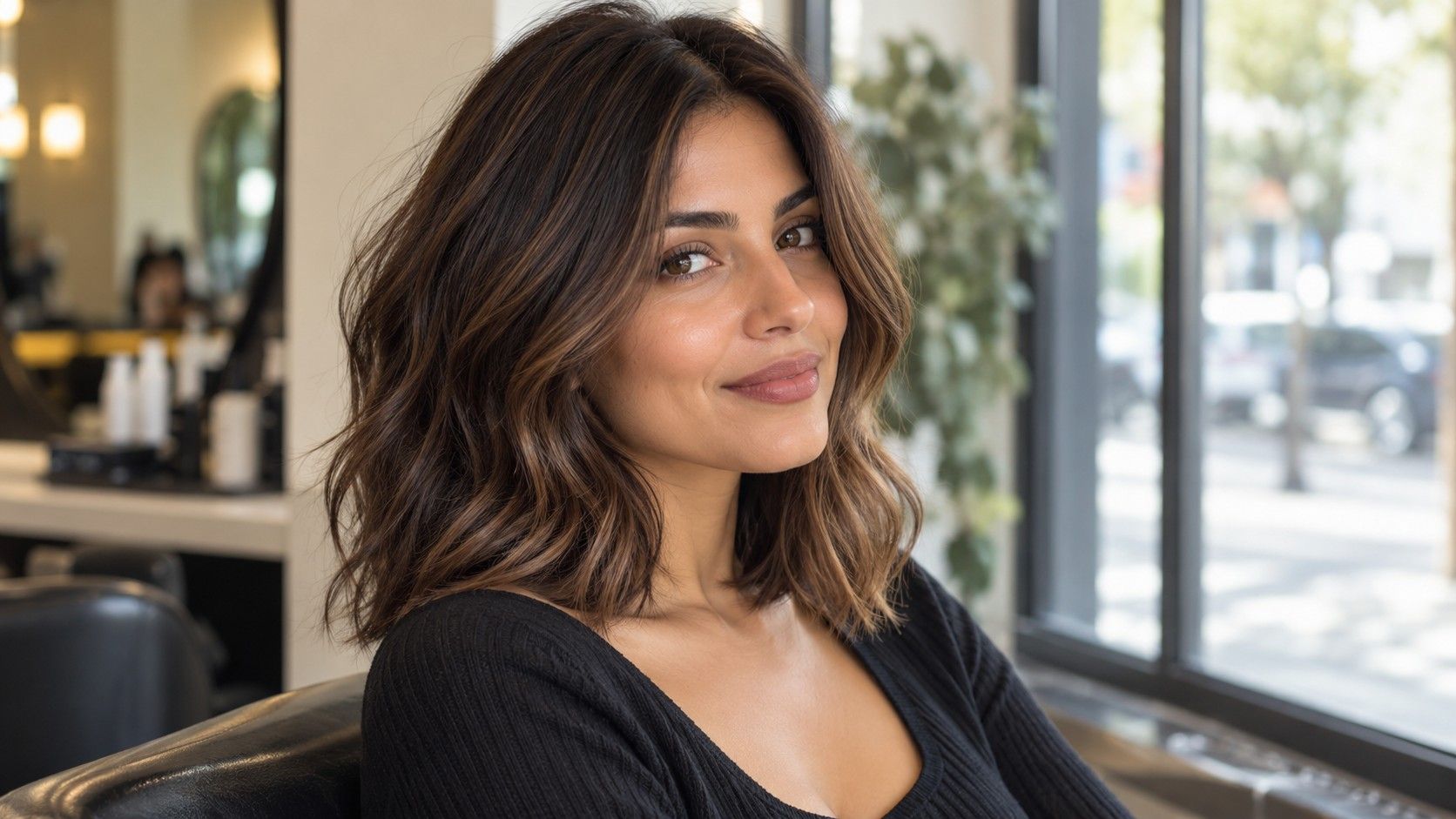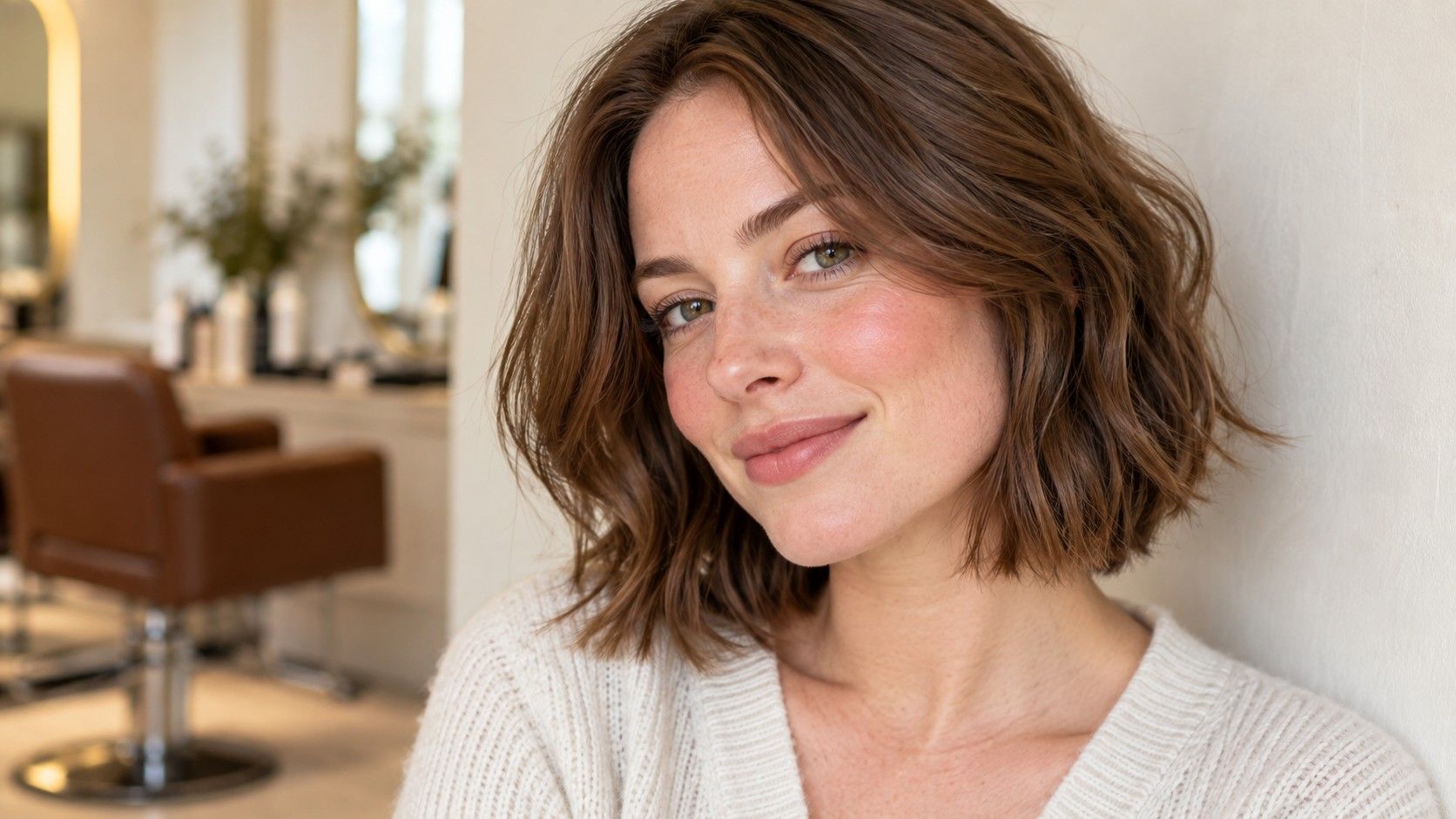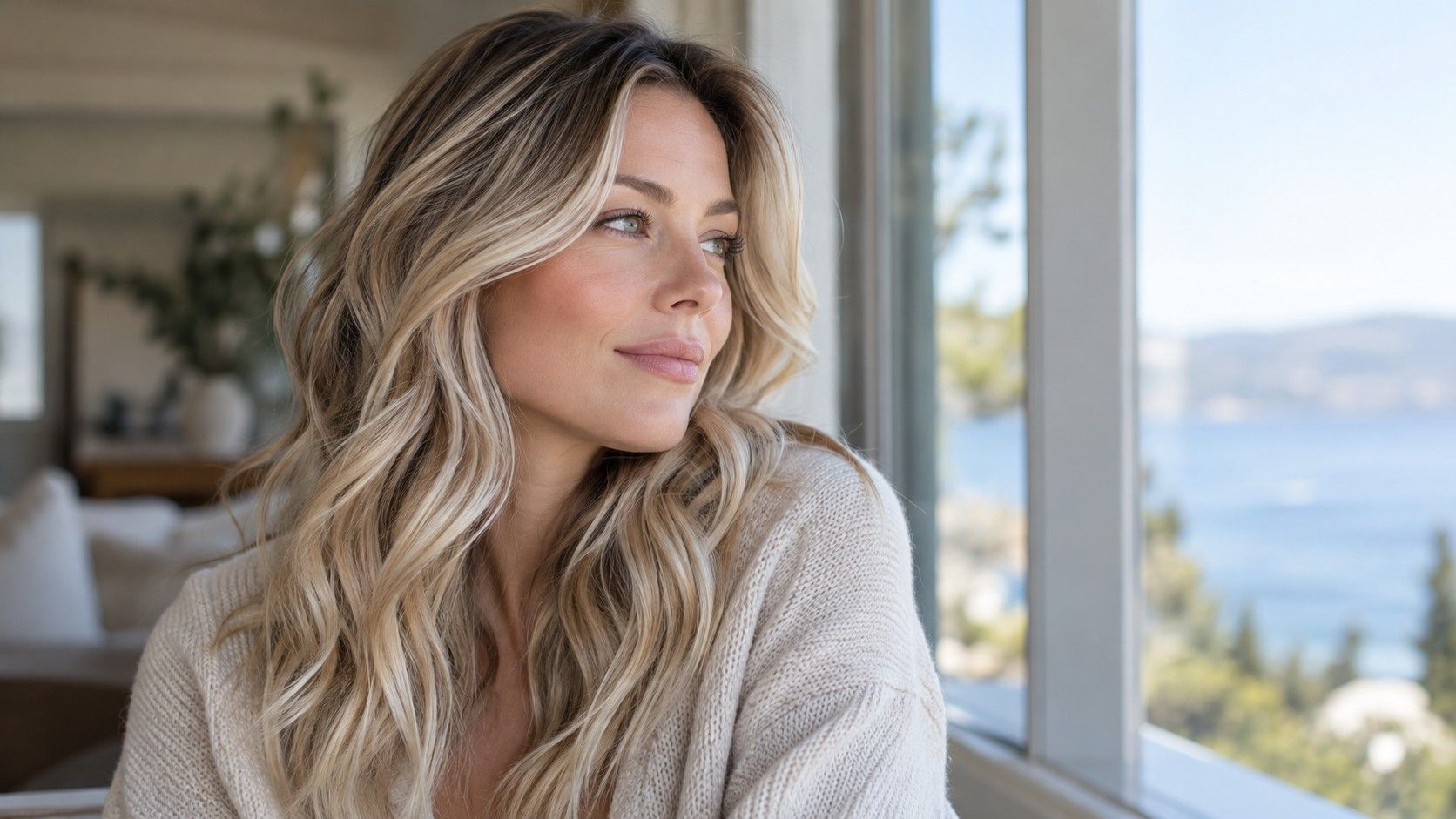
Cool Summer blonde hair is often illustrated with an icy, almost white finish. That can be misleading if the part you actually like is the quiet transition between the roots and the lighter strands. In seasonal styling, Cool Summer usually points toward a cool and relatively softened effect; it does not require the lightest blonde available. I would separate three decisions before saving another picture: how light the hair should be, how cool its reflection should look and how gently the highlights should blend. Each changes the result, and each can be discussed without treating a seasonal label as a rule.
When platinum looks beautiful in the picture and harsh on you
A pale blonde photograph often contains a whole supporting cast: light eyebrows, even lighting, makeup and a background that reduces contrast. If your natural brows are darker, copying the hair alone can create a much sharper effect. Look first at the strip of hair beside the forehead. That is where the change in depth usually feels most immediate.
Compare a light blonde, a medium blonde and a darker blonde with similarly cool reflections. Keep the style and lighting as consistent as possible. If the darker version feels calmer, you may be responding to depth rather than rejecting blonde. There is room between your natural base and platinum, including a deeper overall blonde with selected lighter pieces.
A phone preview can help test the outline, but it cannot show how your existing color will lighten or how individual strands will reflect light. Treat an edited image as a sketch. Ask your colorist whether the depth in the picture is plausible on your starting hair and whether the final result would need several stages.
When ash, pearl and beige all seem to mean the same thing
Blonde names are not standardized descriptions across every salon or product range. An ash blonde in one reference may look grey; another may simply lack obvious gold. Pearl can suggest a delicate cool reflection, while beige may describe a mixture that looks more neutral. The words are useful opening notes, but the picture should carry the detail.
Choose three references with similar lightness: one distinctly greyed, one pearly and one neutral beige. View them next to your face in indirect daylight. Look for the point where the coolness begins to feel flat or deliberately silver. If you dislike that effect, tell the colorist you want the result cool but still recognizably blonde.
Do not confuse softness with a heavy grey cast. A softly blended blonde can have clear-looking strands and gentle contrast without looking silver. Conversely, a strongly ashy tone can look striking even when the highlight placement is delicate. Discuss tone and placement separately so one word does not have to describe both.
When you want soft highlights but still need dimension
A blended blonde needs some difference between lighter and deeper areas to show movement. If every strand becomes equally light, the result can look more uniform than the inspiration even when the overall shade is close. Look between the bright ribbons in the reference: there may be more natural depth left there than you noticed at first.
Fine highlights spread through the hair can create a diffuse impression, while a small number of broader pieces creates a different rhythm. Neither automatically suits a seasonal category better. Texture, haircut and the way you part your hair change what is visible. Ask how the proposed placement would look when your hair dries in its usual shape.
Face framing deserves its own decision. A very pale stripe beside each cheek can feel much stronger than the same blonde scattered through the back. If your goal is a soft Cool Summer effect, ask whether narrower pieces or less contrast near the face would better match the photograph. A dramatic front section is an option, but choose it deliberately.
When your natural roots are darker than the blonde you saved
Darker roots can make a cool blonde feel grounded, particularly when you prefer some definition around the face. A gentle transition can also make the new growth less abrupt than an even pale color running straight to the scalp. Still, a shaded root is not automatically the same thing as leaving your natural root untouched.
Ask whether the design uses your own depth, adds a separate root color or relies mainly on how the highlights are placed. Those approaches can look similar in a finished photograph and behave differently as they grow. If added root color is part of the plan, discuss how it may change and whether it needs renewal at future appointments.
A realistic regrowth conversation includes your parting and hairline. Someone who parts the hair in the same place every day may notice a band sooner than someone who wears a loose, changing part. Grey growth can introduce another contrast that a reference photograph does not show. Describe the issue you actually notice in the mirror rather than asking for a vague low-maintenance blonde.
When your existing blonde turns warm between appointments
Cool reflections can change as color fades, and lightened hair may reveal more warmth than the fresh result suggests. The amount and direction depend on the starting hair, previous work, condition and routine. A photograph cannot tell you how long a particular cool finish will last on your lengths. Ask for a likely range of outcomes rather than a promise of a fixed number of weeks.
Before choosing a much cooler result, show the colorist what your hair looks like now in plain daylight. Note where the warmth is concentrated: roots, middle lengths or older ends. An even cool reference may require different attention across those areas. Applying the same idea everywhere is not necessarily the route to an even-looking result.
Purple shampoo is sometimes treated as a universal answer to warm blonde, but it is a color-depositing product rather than a substitute for an individualized salon plan. Products vary, and porous areas can respond differently. Ask whether a product is appropriate for your result and follow its own directions instead of extending the contact time on guesswork.
When the palette advice conflicts with the blonde you enjoy
Cool Summer is an interpretive styling category, and different systems draw its boundaries differently. It cannot establish what your skin will tolerate or which salon service is suitable. It also cannot decide whether you prefer a brighter, warmer or more dramatic appearance. Use it to describe a direction, then keep your own judgment in the conversation.
Try your shortlist beside a window away from direct sunlight. Wear a plain top first, then the colors you reach for most often. Compare the hair near the face with your brows and the overall impression, rather than judging one tiny patch of skin. Phone cameras can shift their exposure and color balance, so small differences in screenshots deserve some skepticism.
A softly cool blonde may look cohesive with muted blue or rose clothing and less familiar beside a strong warm orange. That does not settle the choice; it reveals how the color interacts with your wardrobe. If you wear strong warm colors daily and like that contrast, there is no need to redesign your whole appearance to satisfy a chart.
Notice the difference between “this feels unfamiliar” and “this is an effect I dislike.” A virtual change may initially seem strange simply because the outline is new. Set two or three references aside and return to them later. If one continues to appeal without the original model’s makeup and styling, it deserves a place in the salon discussion.
When you need a salon request that leaves room for reality
Bring one picture for depth, another for the reflection and a third for highlight placement. They can be different heads of hair. Explain which quality matters in each so the colorist does not have to guess whether you are asking for pale ends, a shadowed root or an overall pearly finish.
Include the color history that could affect the work: previous lightening, permanent dye, at-home color and any areas that feel fragile or unusually dry. Ask what can be achieved while respecting the condition of the hair. A strand assessment may help the colorist evaluate the starting point; an online palette and a preview cannot replace that practical examination.
End with your maintenance boundary and a fallback. For example, you might accept a darker cool blonde if a very light result would require more upkeep than you want. The best Cool Summer blonde hair idea is a coherent plan: a depth you enjoy, a reflection you understand and highlights that still make sense when the roots start growing.