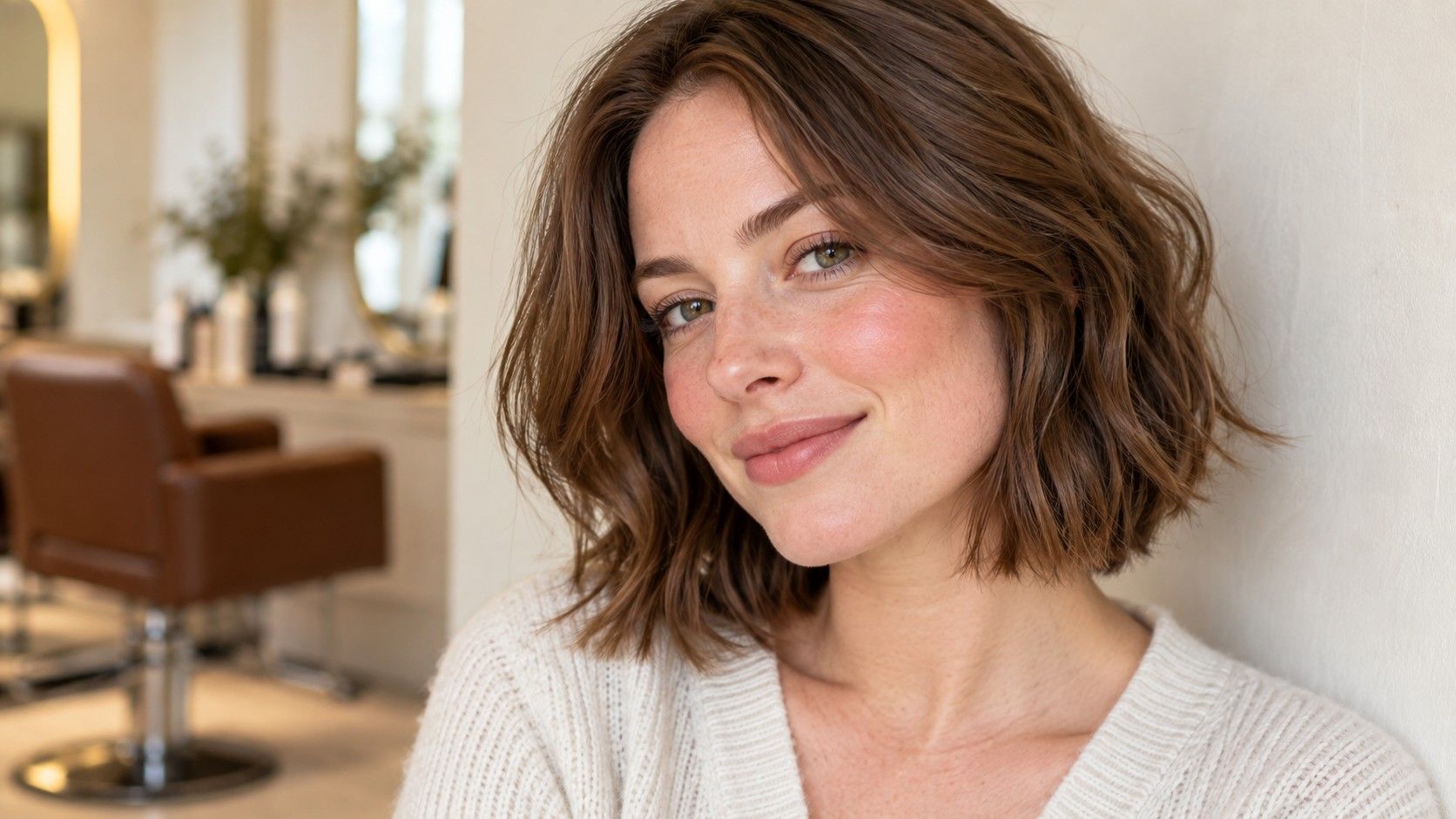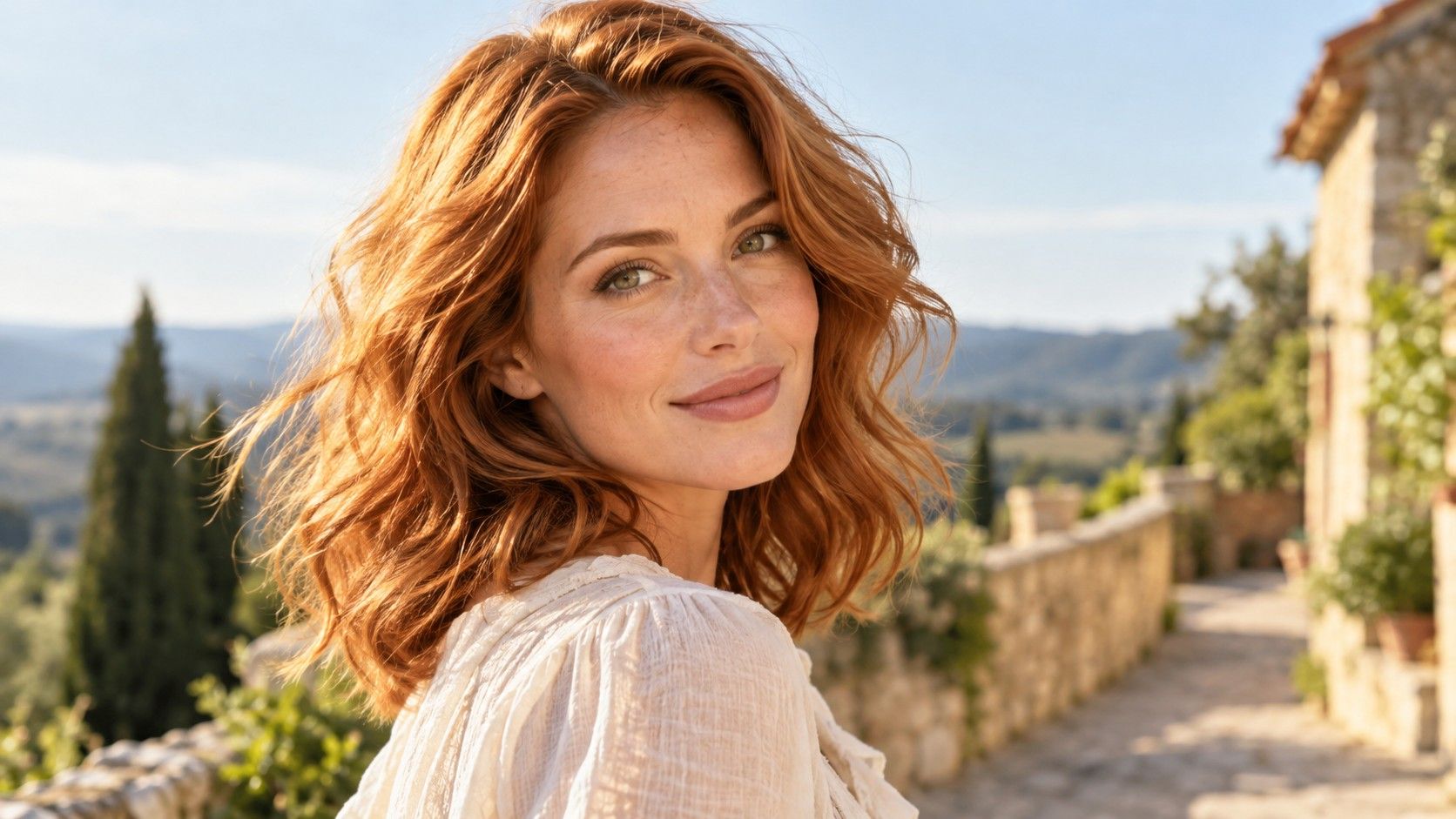
Bright Spring hair colors often get reduced to a strip of vivid copper swatches. That leaves out the harder decision: how bright you want your whole face to look beside the new color. Seasonal palettes can offer a useful starting point, but a label cannot predict a dye result or settle a personal preference. I would treat clear brown, golden blonde and copper as three separate experiments, then compare each against your natural depth, everyday clothes and tolerance for visible roots. The useful choice is the one you still like outside the carefully lit reference photograph.
When the copper reference looks exciting but too loud
A clear copper can make a striking frame around the face. It also occupies a lot more visual space on a full head than it does on a small swatch. Before choosing it, cover the background of a reference picture and look at the hair next to the forehead and eyebrows. Is the attraction really the copper, or the model’s styling, lighting and makeup? That simple crop often changes the shortlist.
Compare an orange copper, a golden copper and a deeper copper brown at roughly the same lightness. These names are descriptive shorthand, and salons may use them differently. A colorist needs a picture plus your words: more golden, less red, clear rather than smoky. Asking for “Bright Spring copper” alone leaves too much room for interpretation.
If the all-over version feels excessive, consider keeping more brown in the design or placing copper through selected lengths. A few bright pieces around the face can still be prominent, especially on a blunt fringe. Ask to see where those pieces would fall with your normal parting. The placement should work on the ordinary morning when your hair is tied back, too.
I would also keep one quieter reference in the folder. It gives the consultation a useful lower boundary. You can then say that the final result should sit between the energetic copper and the copper brown, rather than trying to communicate an exact shade through an edited phone image.
When you want brightness without going blonde
Clear brown is an easy option to overlook because the word brown sounds restrained. A medium or deeper brown with a warm reflection can keep the face framed while bringing more light through the lengths. In a Bright Spring interpretation, “clear” usually describes a relatively clean impression rather than a deliberately smoky or dusty effect. It does not mean the hair must look orange.
Hold a clear golden brown reference beside an ash brown one with similar depth. If one is much lighter, you are testing two variables at once. Cover the ends if necessary and compare the area nearest the face. The question is whether the cleaner warmth feels lively or distracting, not whether a named seasonal rule declares it correct.
Natural dark roots can belong in this design. A continuous dark frame with warmer movement through the middle may feel more comfortable than lifting every strand. Explain whether preserving your brow-to-hair relationship matters to you. Someone who likes a strong dark outline may dislike a flattering warm color simply because it removes that familiar contrast.
Watch for reference pictures in which shine creates the entire warm effect. Hair photographed beside a window may show golden ribbons that disappear under flat lighting. Ask your colorist whether the image suggests actual lighter sections, a warm overall tone or mainly reflected light. Those routes involve different commitments.
When golden blonde starts to look too pale
Golden blonde can fit a bright, warm direction, but the palest version is not automatically the most effective. A very light blonde may reduce the contrast that made a brighter palette appealing in the first place. Compare a richer golden blonde with a pale champagne shade while keeping the hairstyle similar. Notice the relationship to your brows before judging the ends.
A darker root or deeper pieces between highlights may preserve definition. That is a design choice, not a guarantee of low maintenance: a deliberately shaded root can still need salon attention as the rest of the color changes. Ask what your natural regrowth would look like against the proposed plan and whether any root color would also need renewing.
Golden should also be separated from unwanted yellow in the conversation. One person means a soft honey reflection; another means a bold, almost sunflower tone. Bring examples of both a gold you enjoy and a yellow you dislike. A negative reference is often clearer than another appealing photograph.
If your current hair is substantially darker or contains old color, discuss how much change is realistic in one visit. The reference does not reveal the model’s starting point or color history. A slower route toward a richer blonde may leave more choices open than insisting on the palest image immediately.
When the season label and the mirror disagree
Bright Spring is part of a styling framework, and interpretations vary between systems and analysts. It is useful as a language for warmth, clarity and contrast; it is less useful as a verdict that rules out a color you enjoy. If every recommended copper feels wrong, pause the shade hunt and examine which quality is causing the problem.
Test beside a window in indirect daylight, with your hair visible and a plain background behind you. Turn off a beauty filter and avoid a strongly colored wall that may reflect onto your face. Compare two images taken in the same position. Phone cameras can adjust exposure and white balance automatically, so even this exercise is a rough comparison rather than a measurement.
A neutral shirt helps when you are separating hair from clothing effects. Afterwards, try the brighter colors you actually wear. A golden brown that looks quiet beside grey may feel completely different beside coral or turquoise. The goal is an everyday combination you like, not a single photograph that performs well in an abstract test.
Pay attention to your own preference for contrast. You may enjoy a dramatic copper even if a softer brown looks more balanced. Those are different goals, and both are worth saying aloud. I would write down “I want visible color” or “I want my face noticed first” before the consultation; that sentence can resolve more than another palette chart.
When fading and roots could change your answer
A clear warm shade has a life after the salon photograph. Its appearance can shift with washing, light exposure, the condition of the hair and previous color. Copper may change noticeably as it fades, but there is no reliable universal timetable for everyone. Ask what the likely direction of change is on your particular lengths, especially where older lightening remains.
Regrowth deserves a separate look. A deep natural root beside a bright copper can create a strong band even when both colors suit you individually. Compare the full-length inspiration with a picture showing roots several weeks later if the salon has a relevant example. Do not assume the polished final photograph represents the whole interval between appointments.
Be honest about your styling routine. Smooth, waved hair shows ribbons of gold differently from a compact curl pattern or a simple ponytail. Fine face-framing pieces can disappear into the rest of the hair when tied up, while a larger copper panel may become more visible. Ask to see the proposed sections with your hair both down and gathered back.
Before committing, agree on the upkeep you are willing to do at home and the kind of salon visit you could realistically repeat. Follow the instructions for any product used, including its allergy precautions; a seasonal palette offers no information about product suitability. If a maintenance routine sounds burdensome during the consultation, it will probably feel longer in the bathroom.
When you are ready to bring three pictures to the salon
Build a small shortlist with one clear brown, one golden option and one copper option. Keep their depth reasonably close so the difference is easy to discuss. Add a photograph of your current hair in ordinary daylight, including the roots and ends, and describe previous permanent color, lightening or color-removal work as accurately as you can.
For each image, identify one thing you want to borrow: the depth at the face, the golden reflection, the placement of copper or the retained dark root. You are not asking to copy another person’s whole appearance. This keeps the conversation practical when the inspiration has a different haircut, texture or natural base.
Finish with a boundary: the lightest you would go, the reddest you would accept, or the amount of root contrast you could live with. Ask the colorist which of the three directions is most realistic on your starting hair. Bright Spring hair colors become much easier to choose once clarity, warmth and depth stop competing inside one vague request.