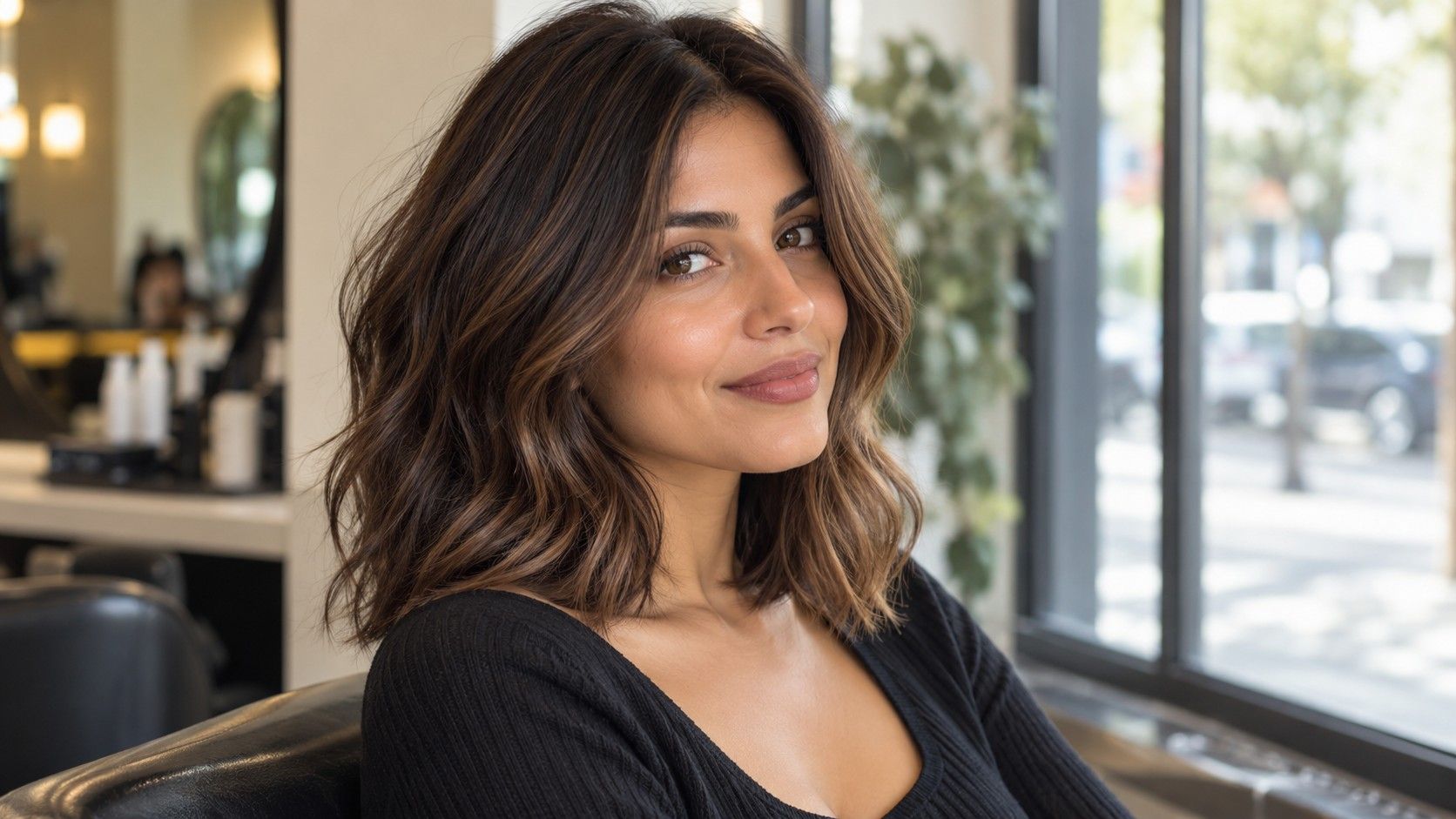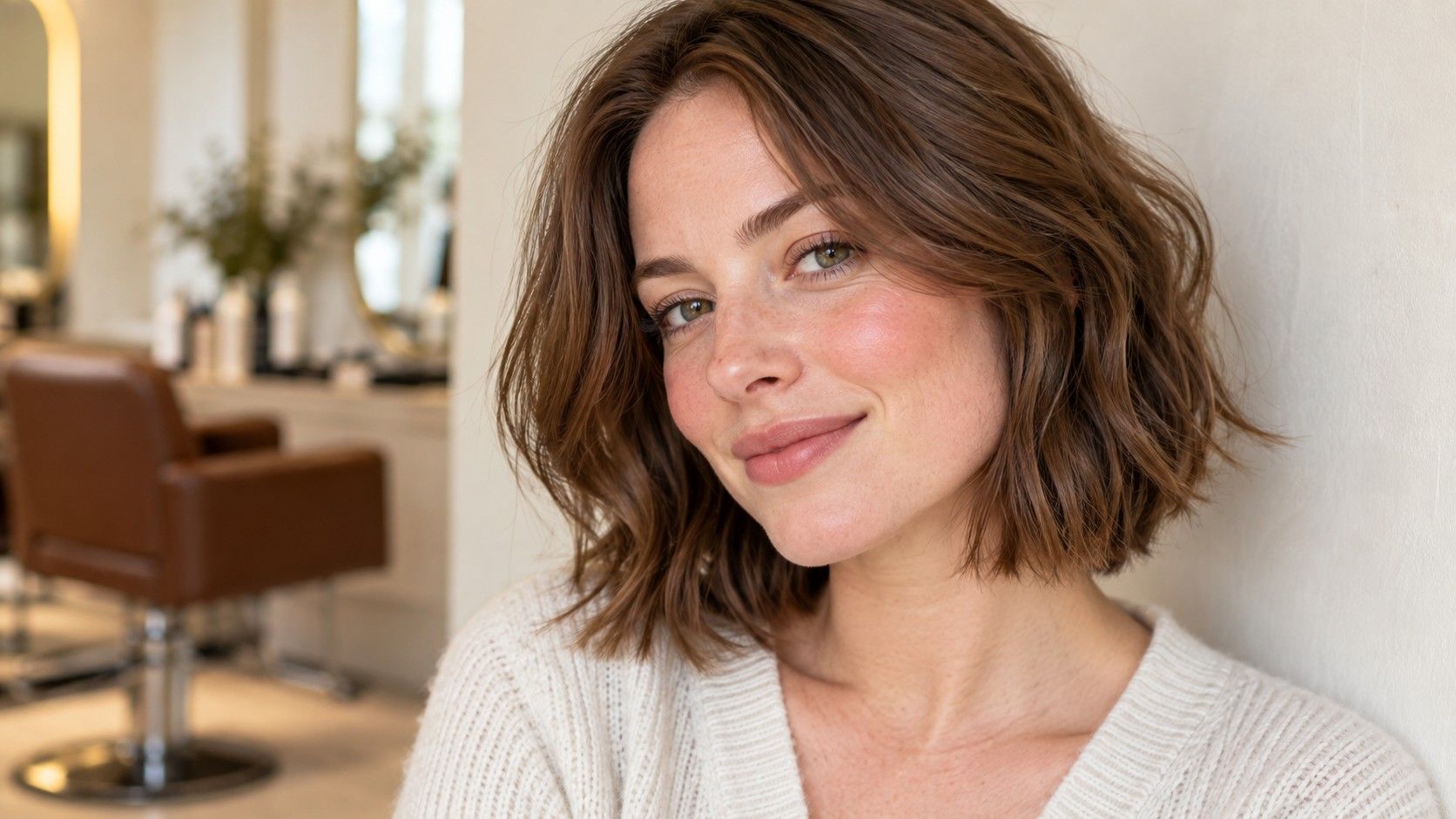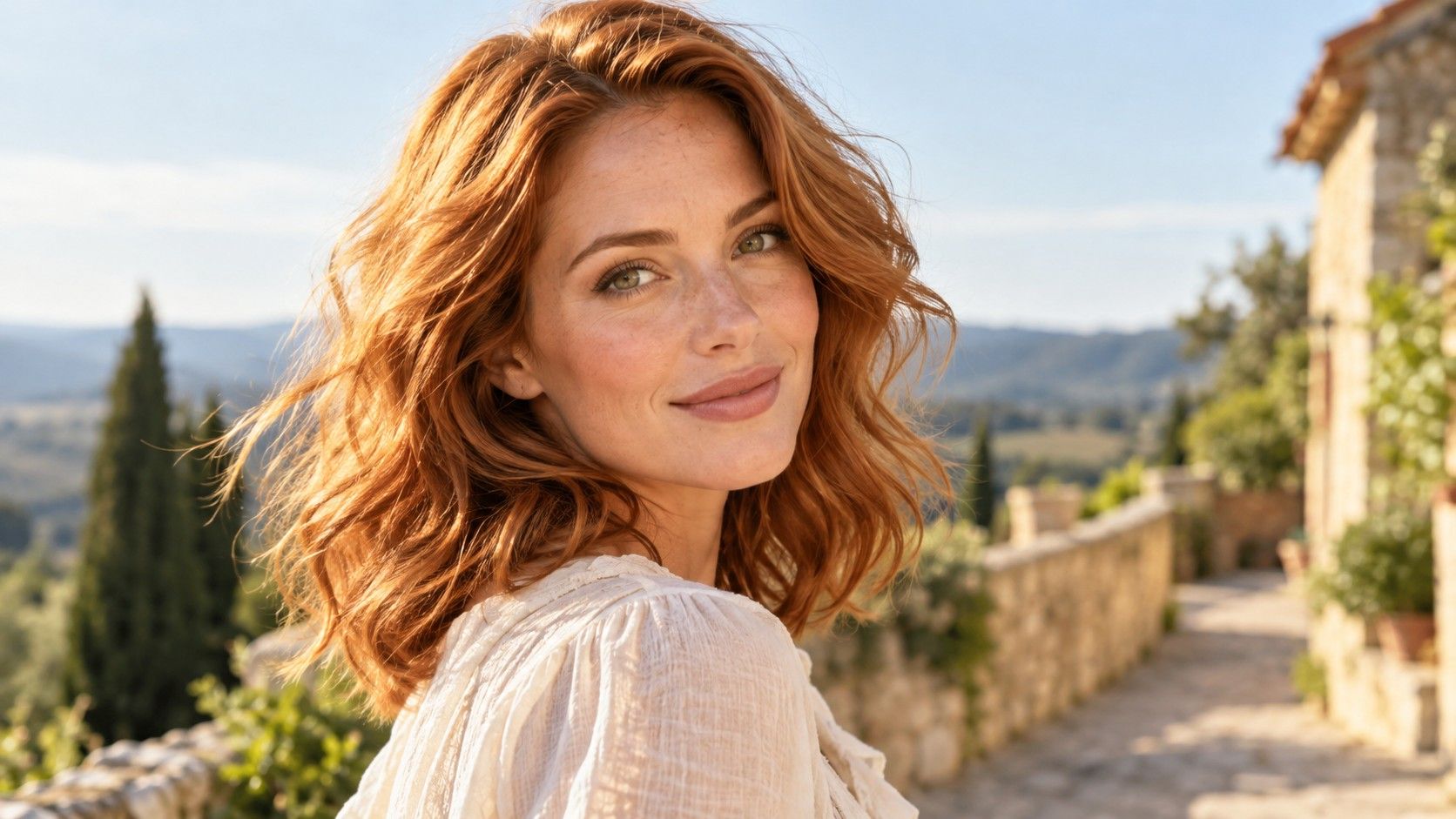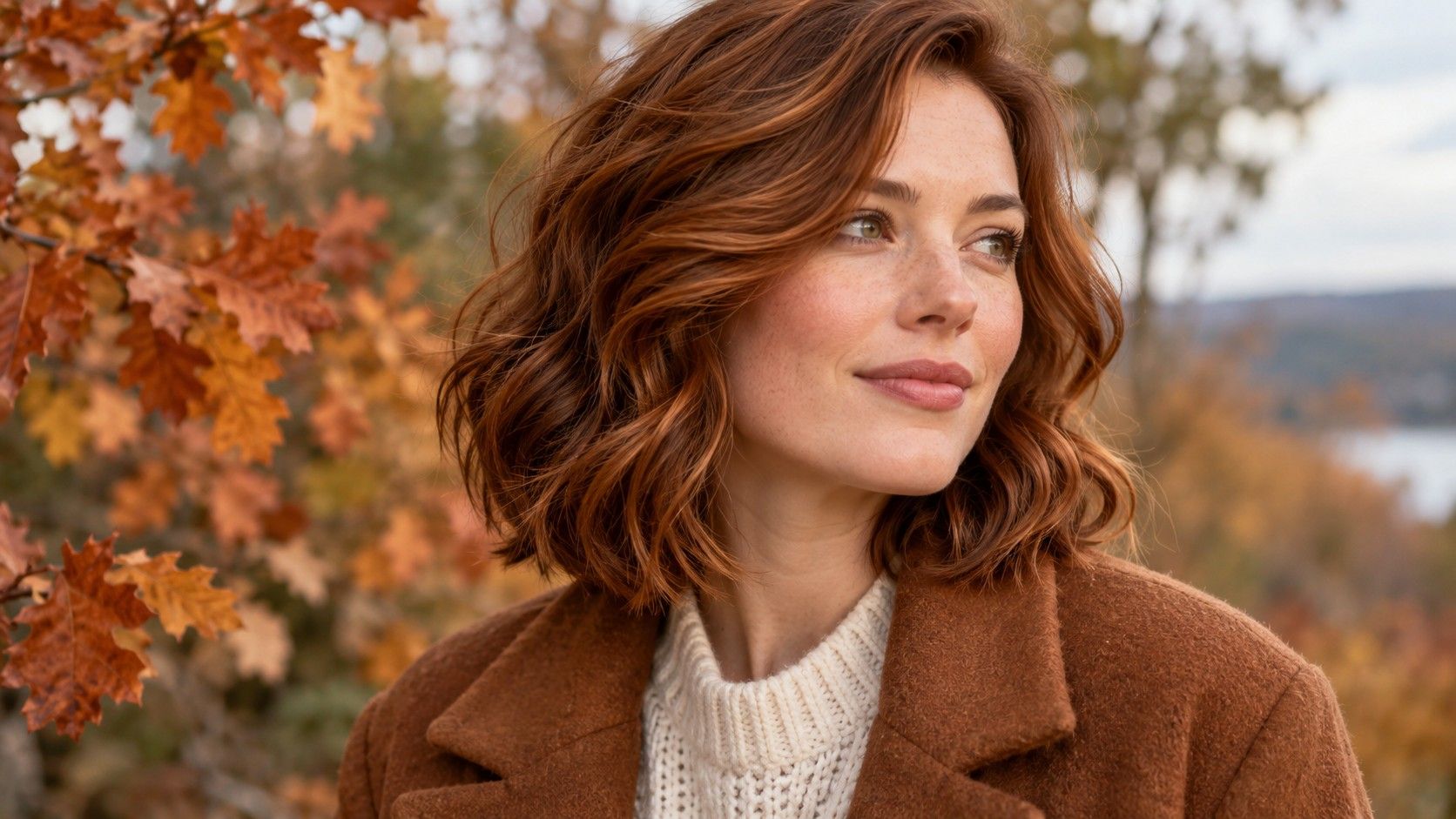
Fall hair colors for fair skin can range from a small golden shift to a full copper or deeper chestnut. Fairness alone does not choose the shade. Start with how much warmth and contrast you want beside your face, then consider what the change will ask of your current color and your routine.
When every autumn photo seems to show the same bright copper
The familiar fall mood board is full of orange leaves, warm light and shiny red hair. Those settings flatter the photograph, but they make it harder to judge a color. A copper shade under golden afternoon light can look more intense than it does indoors, while a warm filter may disguise a distinctly pink or golden skin tone. Seek a second reference taken in plain daylight before deciding that the shade is your answer.
Fair skin describes lightness, not one undertone. Two people with equally pale skin can prefer very different hair colors: one enjoys strawberry gold, another likes neutral chestnut, and another feels most comfortable with a cooler brunette. Seasonal taste matters too. You can want an autumn change without wanting visibly red hair. A slightly richer brown or a few soft golden pieces may deliver the change you had in mind.
Compare the options with your face visible and the same neutral clothing. Look at the whole effect, including brows and natural roots, rather than inspecting whether a shade fits a label. If copper makes redness more noticeable to you, try a less saturated reference. That is a preference test, not proof that your skin belongs to a particular category or that all reds are ruled out.
Try strawberry or soft copper when you want warmth without a dark frame
Strawberry blonde and light copper are worth comparing if you enjoy a bright overall impression. Strawberry usually suggests a blonde base with a red-gold influence; light copper generally makes the red-orange direction more visible. These are descriptive names, not exact formulas. Hold two swatches together and ask which one the reference actually resembles, especially if the picture has been edited.
On fair skin, a light warm shade may create a gentler boundary around the face than dark auburn. The result still depends on eyebrows, eye color and your starting hair. If your brows are naturally dark, that contrast remains part of the look. You do not need to change them to match a mood board. It is more useful to select a hair reference that already shows the kind of brow contrast you like.
A pale copper photograph does not reveal how much work it would take to reach that depth from your hair. A dark base, old brown dye and existing blonde highlights present different starting points. Tell the colorist what has been used on the lengths, even if it was months ago. Ask what is achievable while respecting the current condition, and whether an intermediate shade would be a better first step.
Keep the intensity question separate from the lightness question. A pale but vivid copper can feel more dramatic than a deeper, muted auburn. If you want a cautious change, compare muted and brighter references at similar depths. This prevents the familiar misunderstanding where soft is taken to mean lighter, even though what you meant was less orange.
Choose chestnut or auburn when you want a richer autumn outline
Chestnut is a practical comparison for someone who likes brown hair but wants a warmer reflection. Auburn usually pushes more clearly toward red-brown, although salon naming varies. Bring an example of both and look at the brightest areas. Would you be happy seeing that amount of red in daylight, or do you want the brown base to remain the main impression? That single question narrows the shortlist quickly.
A deeper shade increases contrast with fair skin. Some people enjoy how clearly it frames their features; others find the same depth heavier than expected. Test the proposed brown against your natural roots and a slightly lighter version. A dark chestnut is not automatically more flattering because the season has changed, and there is no need to move several shades darker to make a warm reflection noticeable.
Watch the ends in reference photographs. A brown base with copper ends is a different request from an even chestnut, even if both images carry the same name. If your hair already has lighter ends, they may respond differently to added color. Discuss whether you want to keep that visible dimension or work toward a more uniform result. The plan should account for the whole head, including areas that are currently uneven.
If you expect to go lighter again after autumn, say so before choosing a deep all-over color. A substantial darkening can make that later change more involved. There may be a way to create a richer impression through selected lowlights or a less dramatic shift, but suitability depends on the existing hair. Ask about the future route as well as the finished appointment photograph.
Keep your blonde and change the warmth in smaller places
A fall update does not have to replace blonde with brown. Beige-gold pieces, a warmer overall impression or a few deeper ribbons can change how the hair reads while keeping a light base. Compare a warm blonde reference with a distinctly copper one. If you prefer the blonde, there is no reason to request red simply because it appears more often in seasonal galleries.
For a subtle result, placement deserves as much attention as the swatch. A warm face frame is visible whenever your hair is down; warmth farther inside the hair appears more intermittently. If you often pull your hair back, show the colorist your usual style. A beautifully blended reference photographed only from behind says little about the color you will see around your own forehead.
Existing highlights can make a modest tonal change look surprisingly noticeable. They can also mean that different sections take color unevenly. Avoid treating a temporary-sounding service name as a guarantee of a predictable fade or an effortless return to the old shade. Ask what the proposed change could leave behind on your particular lightened lengths and what the refresh would involve.
Decide how much fading and regrowth you are willing to see
A fresh red or copper finish is only one stage of the choice. Ask how the tone may soften on your base and whether lighter sections could fade differently from the rest. A colorist can discuss the likely pattern after assessing your hair, but an exact universal timeline would be misleading. Washing habits, condition and the chosen service all affect the experience between appointments.
Regrowth can be a larger issue than fading if you move far from your natural depth. Pale roots against a rich auburn make a different line from dark roots beneath strawberry blonde. Decide whether you want that contrast softened or whether you are comfortable seeing it. Ask for a reference showing a grown-out version when available; a freshly finished root area is not the whole maintenance story.
Be specific about the routine you will maintain. Someone who swims regularly or washes frequently may want a different plan from someone who is happy to schedule frequent refreshes. Ask which care steps are relevant to your chosen result rather than buying a shelf of products on the strength of a color name. A routine that fits ordinary life is more useful than one followed only in the first week.
If you are choosing color for an event, leave room for a consultation and any assessment the salon recommends instead of squeezing a major change into the final evening. For hair dye, follow the product instructions and the salon’s requirements for allergy testing.
Bring two autumn references that show a clear preference
Choose one main direction and one alternative: perhaps muted copper versus chestnut, or strawberry blonde versus soft gold. Include a photo at a depth close to your own and one that shows the intensity you want. Name the part that matters in each picture. A request for the warmth of one image and the depth of another is clearer than asking to look like both people.
Write down the practical limits too. You might want your natural roots to remain visible, dislike a vivid orange reflection or need a route back toward blonde later. Show your current hair in daylight alongside the references, and tell the colorist about previous color and lightening. Those details turn an attractive fall idea into a plan that can be assessed rather than guessed.
When the shortlist is still crowded, choose the change you can describe most precisely. Slightly warmer blonde, brown with a restrained copper reflection, or a clearly red auburn are useful requests. The right fall shade for fair skin is not determined by the leaves in the background. It is the combination of warmth, depth and upkeep that you want to live with once the seasonal photograph has been taken.