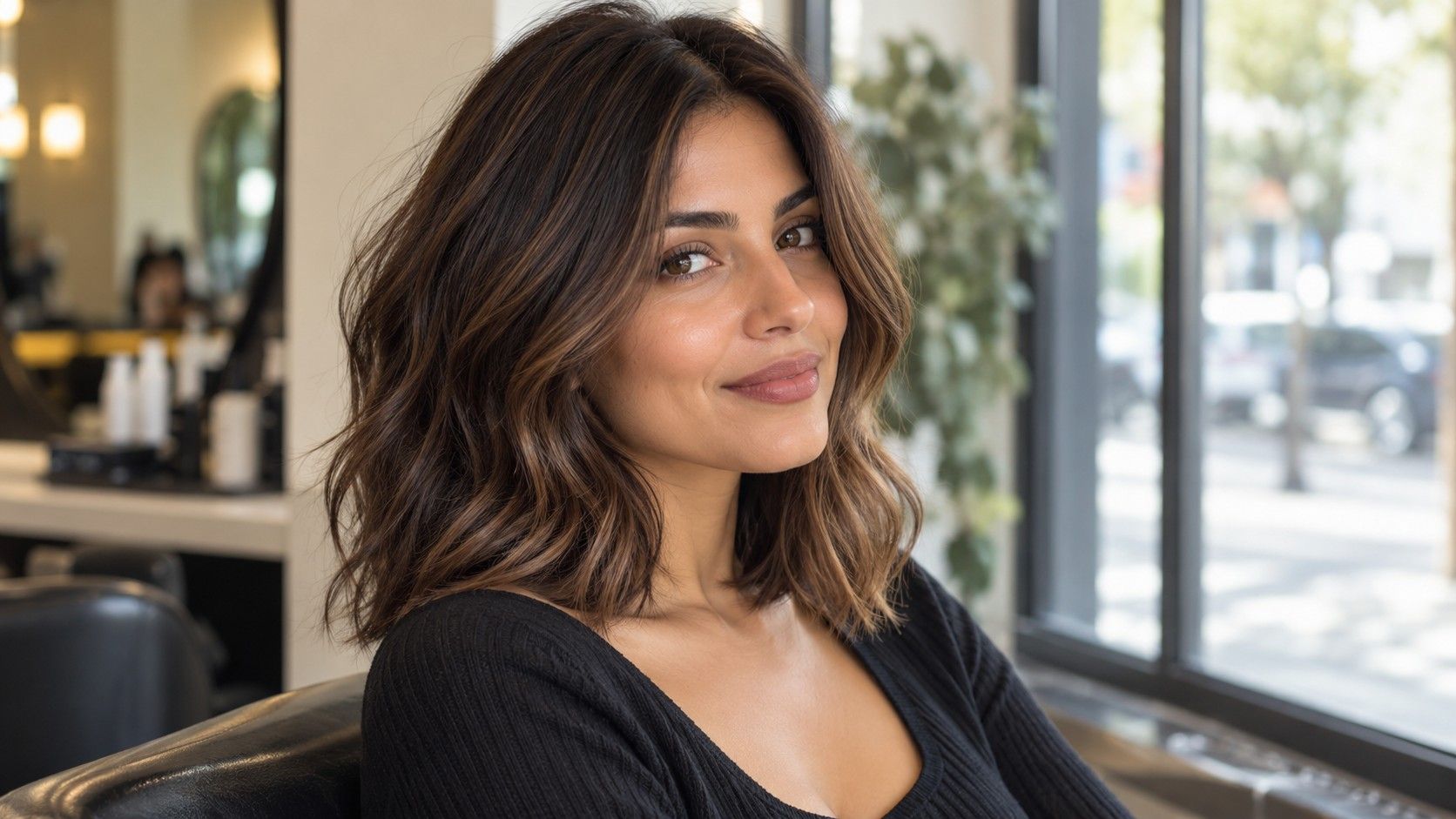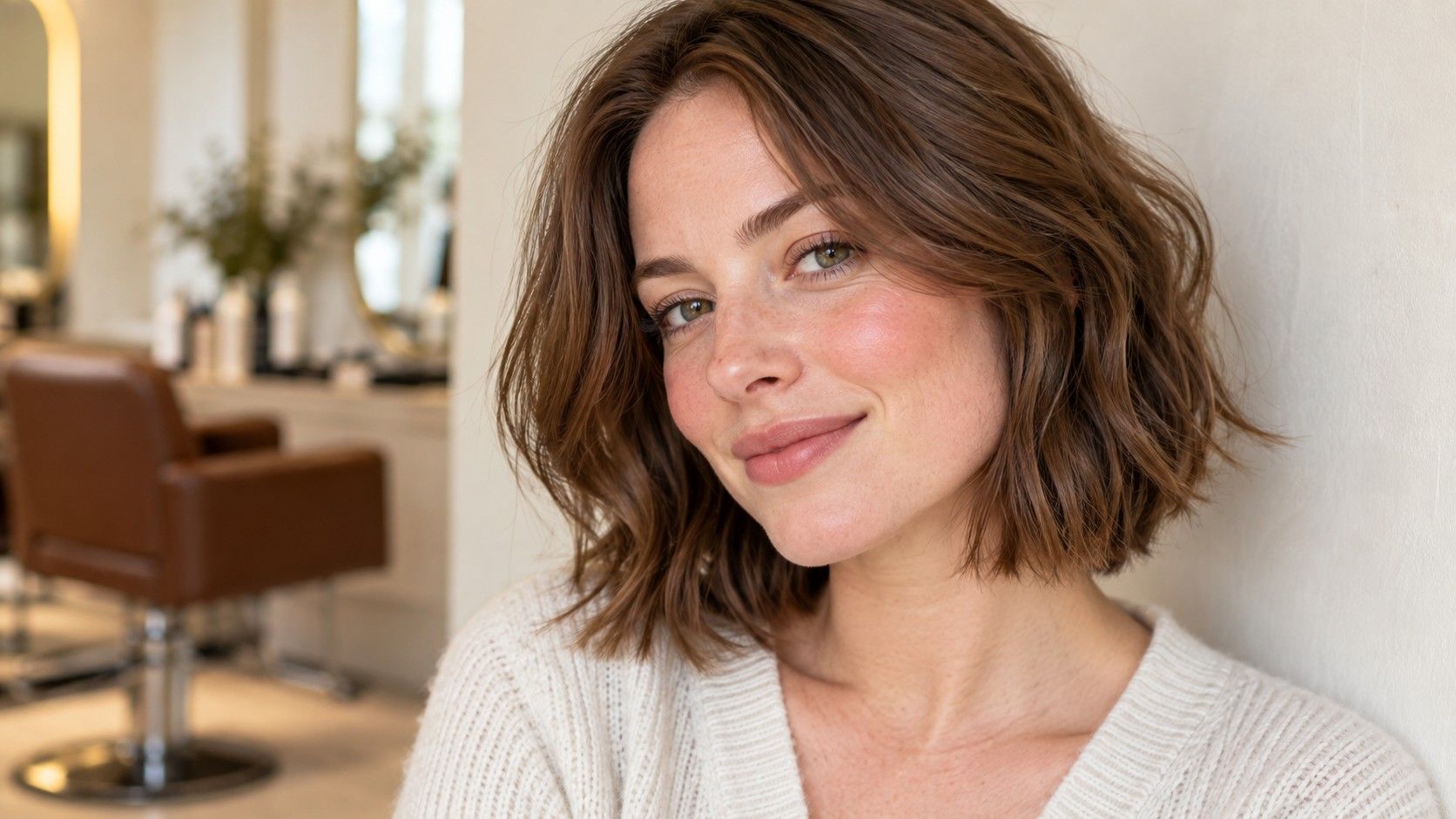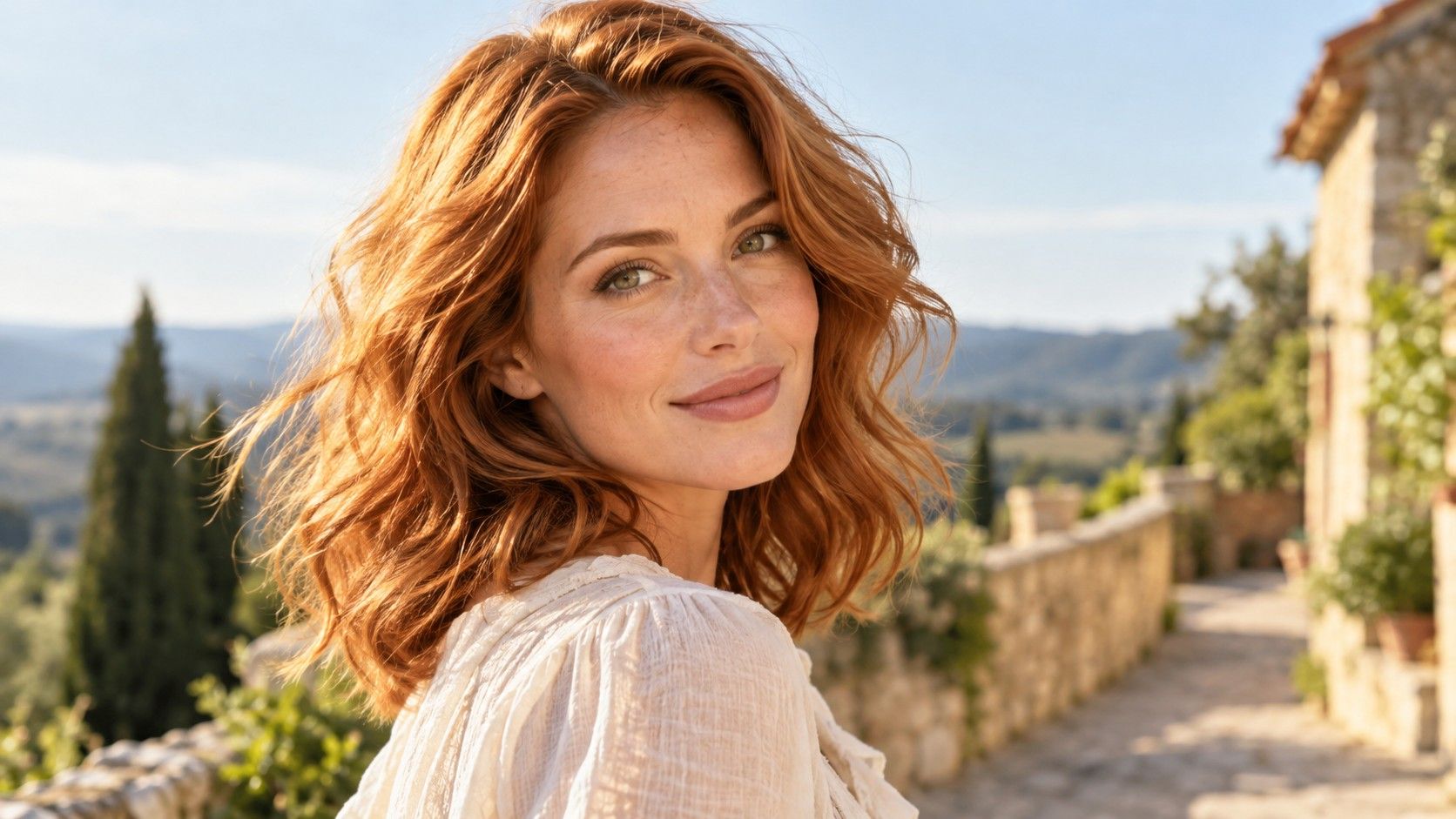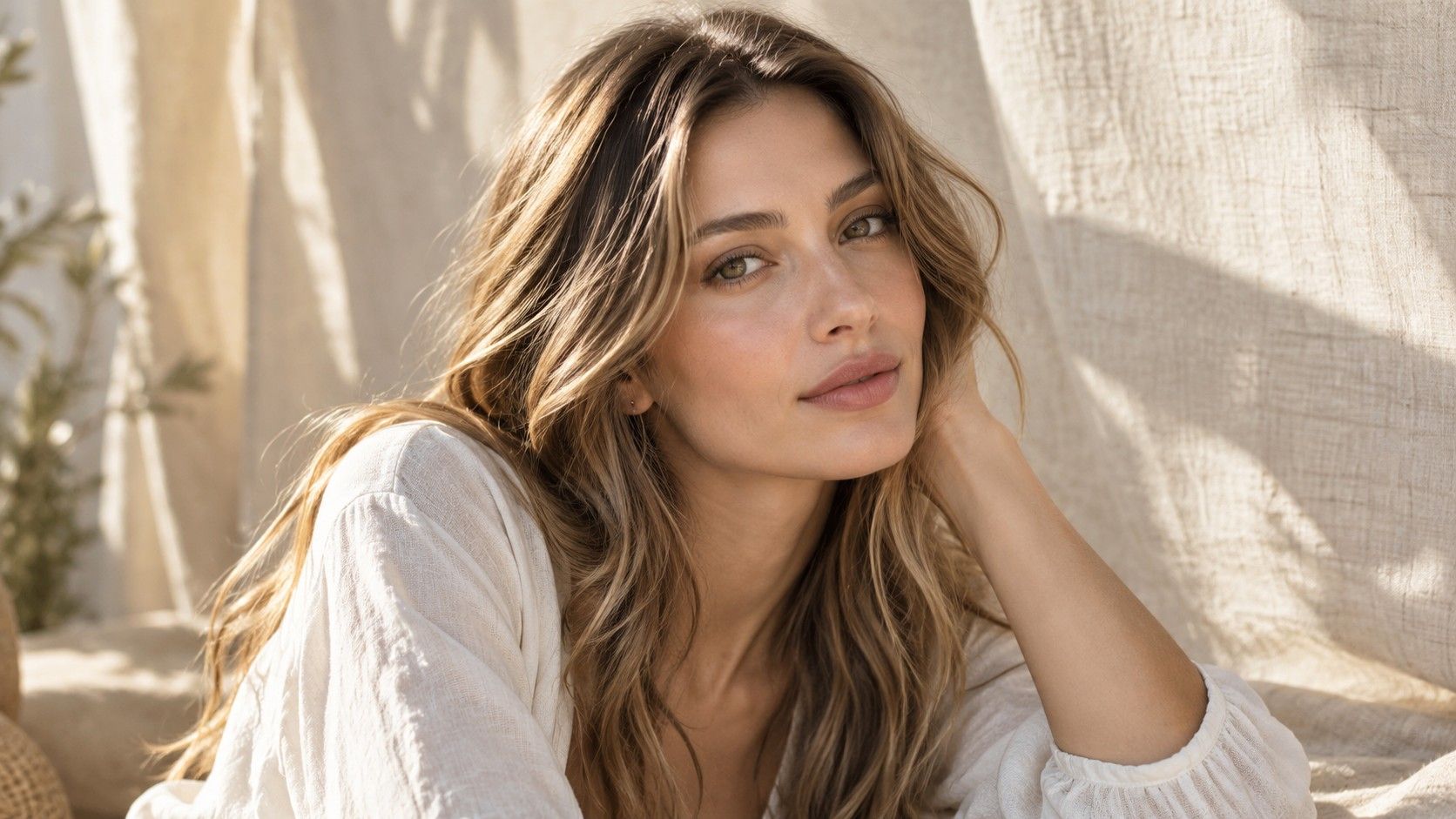
Pale olive skin combines a light complexion with a muted or greenish cast, and hair colour can change how strongly either quality reads. A very dark frame may feel striking; a pale blonde may feel soft or leave too little definition. The useful starting point is your preferred amount of contrast, followed by the warmth of the shade.
When pale skin is being mistaken for a cool undertone
Lightness and undertone describe different things. Pale skin is not automatically pink or cool, and an olive cast does not automatically require ash hair. Start by separating the two observations: how light is the skin, and which colour impressions do you notice in ordinary daylight? You do not need to settle on a perfect label before comparing hair shades. A repeatable visual preference is enough to begin.
Look at your neck as well as your cheeks, since flushing and makeup can obscure the overall impression. Use indirect window light, a quiet top and a mirror without a strong warm bulb beside it. A phone picture can help record the comparison, but automatic exposure may brighten the face when dark hair fills the frame. Check the mirror result before trusting a dramatic before-and-after image.
Choose references with a complexion and hairline you can actually see. Heavily edited portraits may remove the very muted quality you are trying to understand. Hair colour for pale olive skin should be assessed against your normal appearance, including the natural shadows and variation in the face. A shade that requires a bright filter to look appealing is giving you limited information.
If black looks striking but feels too severe for daily wear
Black or near-black hair creates a clear border against light skin. Some people love that graphic contrast, especially with dark eyebrows or eyes. Others find that the frame dominates the face or makes under-eye shadows feel more obvious. Neither reaction is a failure of olive undertones. You are deciding how much visual definition you want, and the answer may change with the haircut.
Compare deep brown with black before choosing the darkest option. A neutral espresso may retain the depth you like while looking less solid in daylight. Pay attention to the hair beside the forehead and jaw rather than only the shiny sections on top. A dense fringe presents a continuous dark edge; a centre part with hair tucked back leaves more skin visible and can feel less enclosing.
If your natural roots are lighter, discuss the regrowth line as part of the choice. A dark result photographed on the day of colouring does not show what it will look like later. Also ask about the route back toward your original shade. Darkening may feel like a straightforward change, but old colour on the lengths can complicate a later move lighter.
Try medium brunette when you want a softer frame
A medium neutral brunette can provide definition without the sharp edge of very dark hair. Compare a soft chocolate, a neutral brown and a subdued beige-brown at roughly the same depth. The names vary across salons, so use them as conversation starters. The actual swatches should show whether you prefer a slight gold reflection, a quieter neutral finish or a cooler impression.
On pale olive skin, very grey brown may echo muted areas of the complexion. That can look elegant if you like a soft overall palette, but it can also make the face feel subdued. If the area around the lips appears greyer, compare a neutral version before adding more ash. Conversely, a red-rich chocolate may introduce warmth you find distracting. Small differences are worth inspecting beside the cheek.
Dimension should be judged at the face, not only through the back of the hair. A few lighter strands may soften a solid brunette, yet bright stripes can create a stronger pattern than the original colour. Show a reference with the parting and everyday styling you use. Loose salon waves can blend highlights that remain quite separate when the hair is worn straight.
If blonde washes you out, change depth before chasing tone
When blonde seems to remove definition, the issue may be how close the hair is to the skin in lightness. Switching from pale gold to equally pale ash may leave that relationship almost unchanged. Compare a slightly deeper beige blonde or dark blonde as well. A little more depth near the hairline can give the eyes and brows a clearer frame without taking the whole head back to brown.
Keep the warm-versus-cool comparison controlled. Beige, honey and pearl references should be reasonably similar in depth if you want to judge tone. Look for the one that makes the face feel balanced to you, then test it under indoor lighting. A blonde that is luminous by a bright window can look almost colourless in a dim room. The everyday version matters as much as the polished reference.
If your base is naturally dark, the practical route to blonde needs its own discussion. Lightening requirements, existing dye and hair condition may influence how bright you can go and how quickly. Ask what is realistic now and what would take more than one service. A deeper blonde that works with the present hair may be a more satisfying choice than an ambitious pale shade you cannot comfortably maintain.
When you want copper without overwhelming a light complexion
Copper can be a deliberate, expressive choice for pale olive skin, but intensity deserves a separate test. A muted auburn, a soft copper-brown and a bright orange-copper are very different frames. Hold references near the jaw and look at the full face. If the brightest option seems to arrive before your features do, compare a browner or less saturated version rather than rejecting warmth completely.
Pay attention to how much coloured hair sits beside the cheeks. Long copper lengths worn behind the shoulders may feel less intense than the same shade in a short fringe and bob. Try the reference against clothes you frequently wear near the face. A warm cream jumper and a cool grey coat can change the impression enough to reveal which version you would enjoy most often.
Keep the maintenance conversation specific. Ask how the proposed copper is likely to fade on your hair and whether old lightened ends might look different from the roots. Do not choose a vivid shade on the assumption that it will disappear neatly after a few washes. A strand test can help expose uneven uptake, while a discussion of the next change helps you judge the commitment.
Make the final choice beside your real roots and routine
Choose two or three references after the comparison, each with a clear role: medium brunette for softness, deep brown for contrast, or a deeper blonde for brightness with definition. You may prefer copper instead of one of these. The shortlist should reflect what looked convincing beside your face, not an obligation to cover every colour family. Mark the exact detail you like in each photograph.
Bring the colourist a current image with visible roots, along with a history of dye and lightening on the lengths. Tell them how often you are realistically willing to return and whether you usually wear the hair straight, tied up or curled. Placement that hides regrowth in one style may be obvious in another. Those practical details can determine whether a subtle root transition or a uniform colour suits you better.
Follow the salon or product guidance for allergy precautions and have hair condition assessed before a major change. After colouring, check the result in ordinary daylight and keep a simple unfiltered photograph for comparison. Pale olive skin does not need to be hidden or corrected. The goal is a frame you like: enough depth to feel defined, enough warmth or coolness to suit your taste, and upkeep you can sustain.