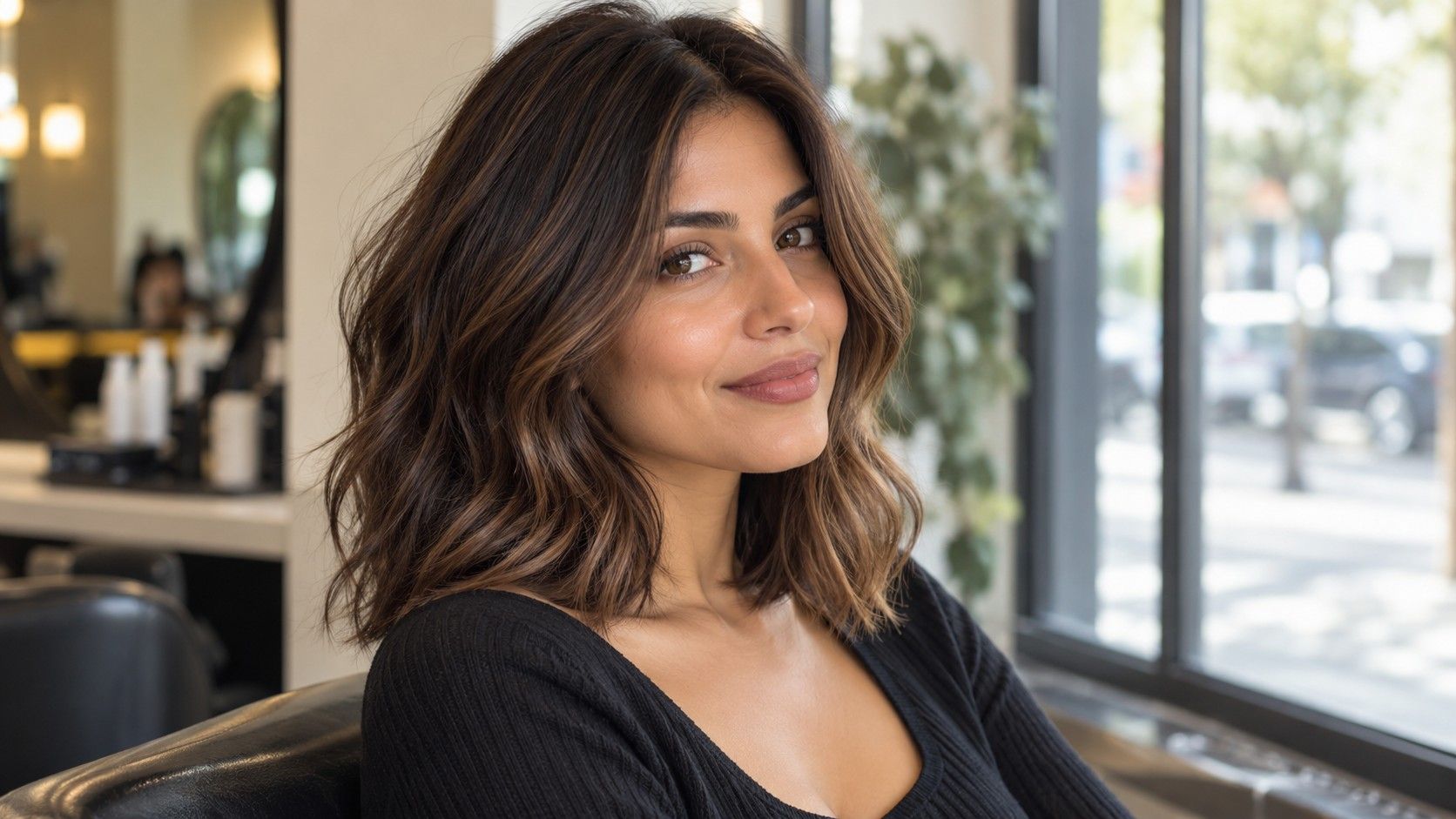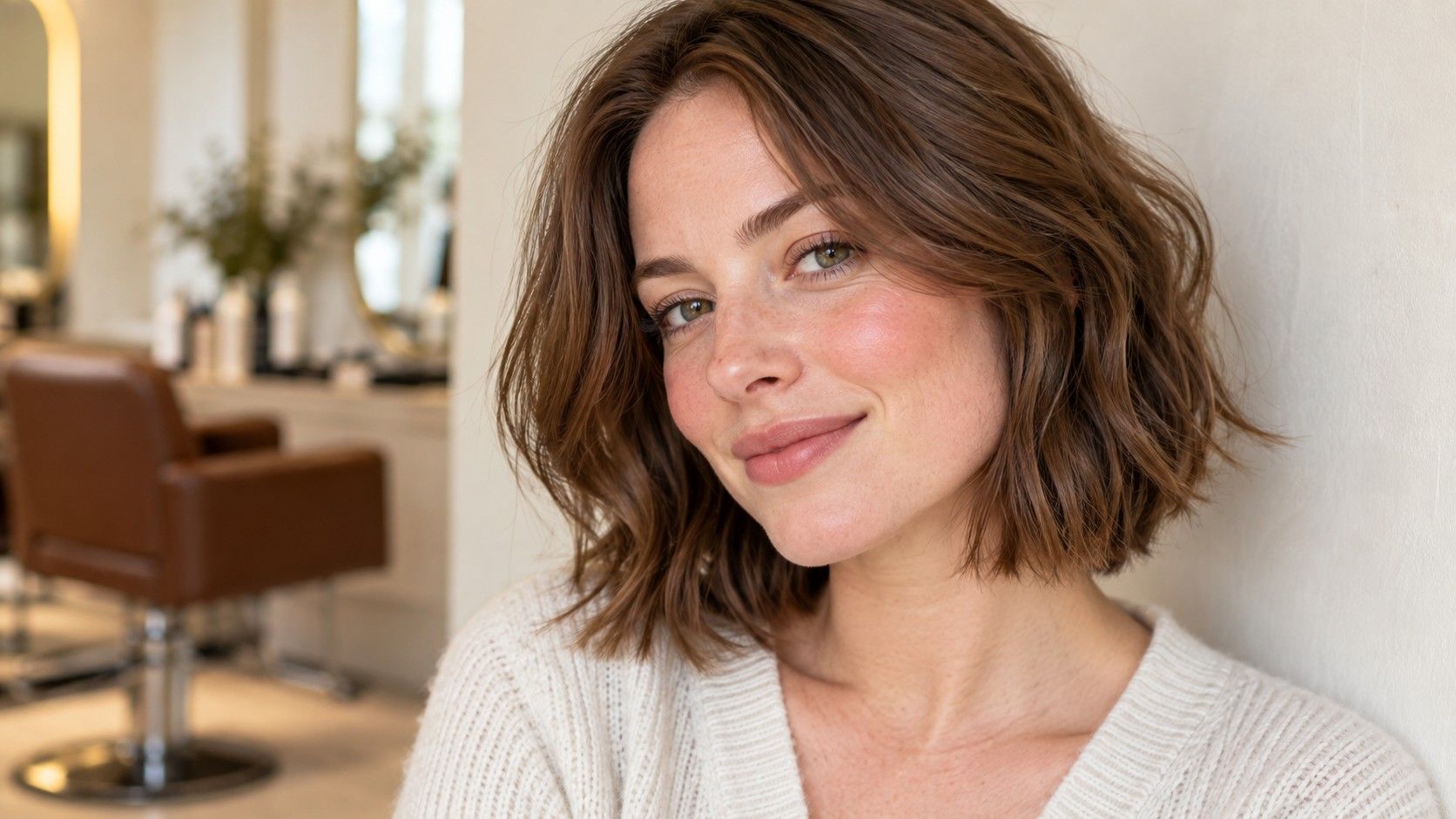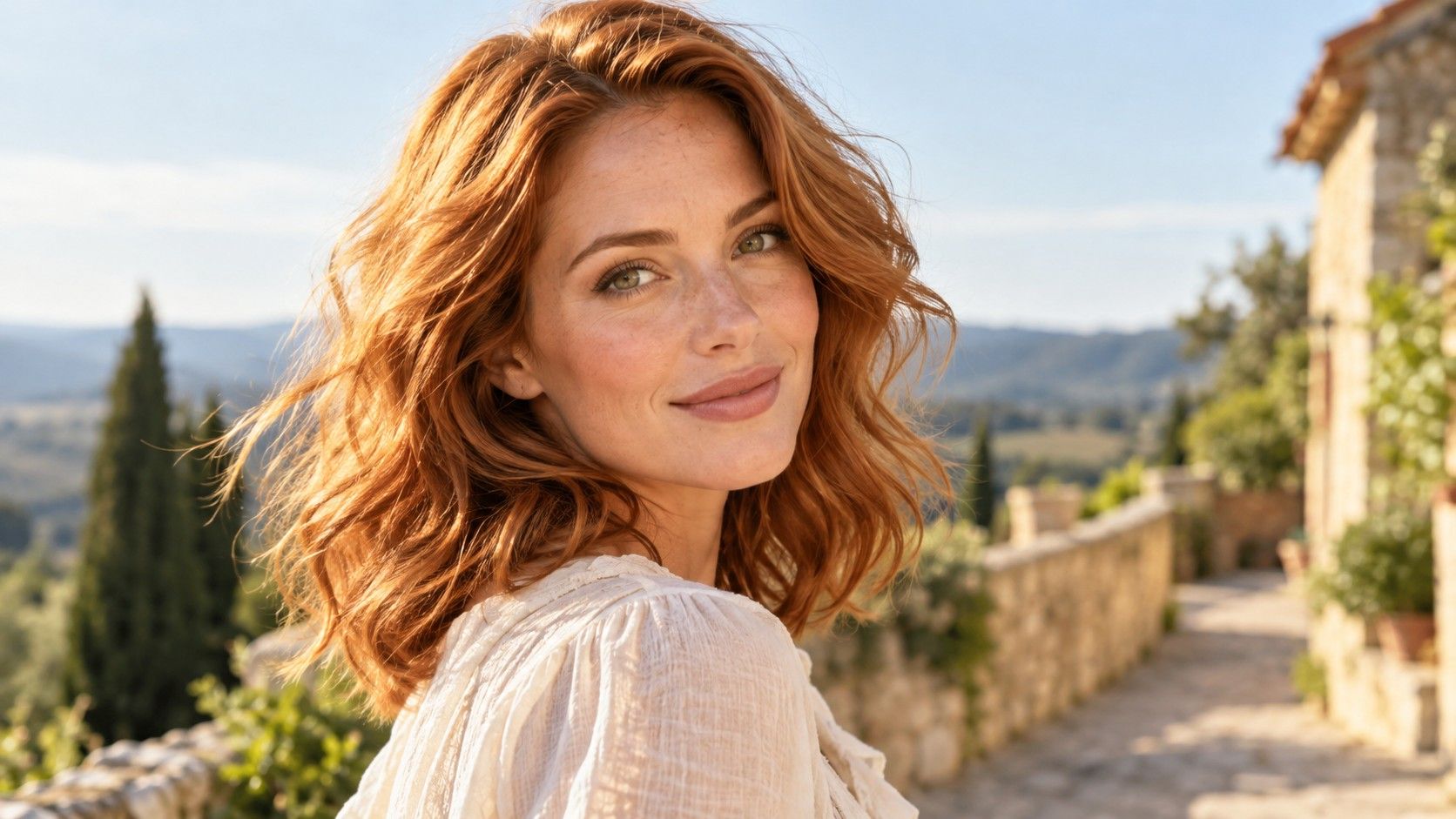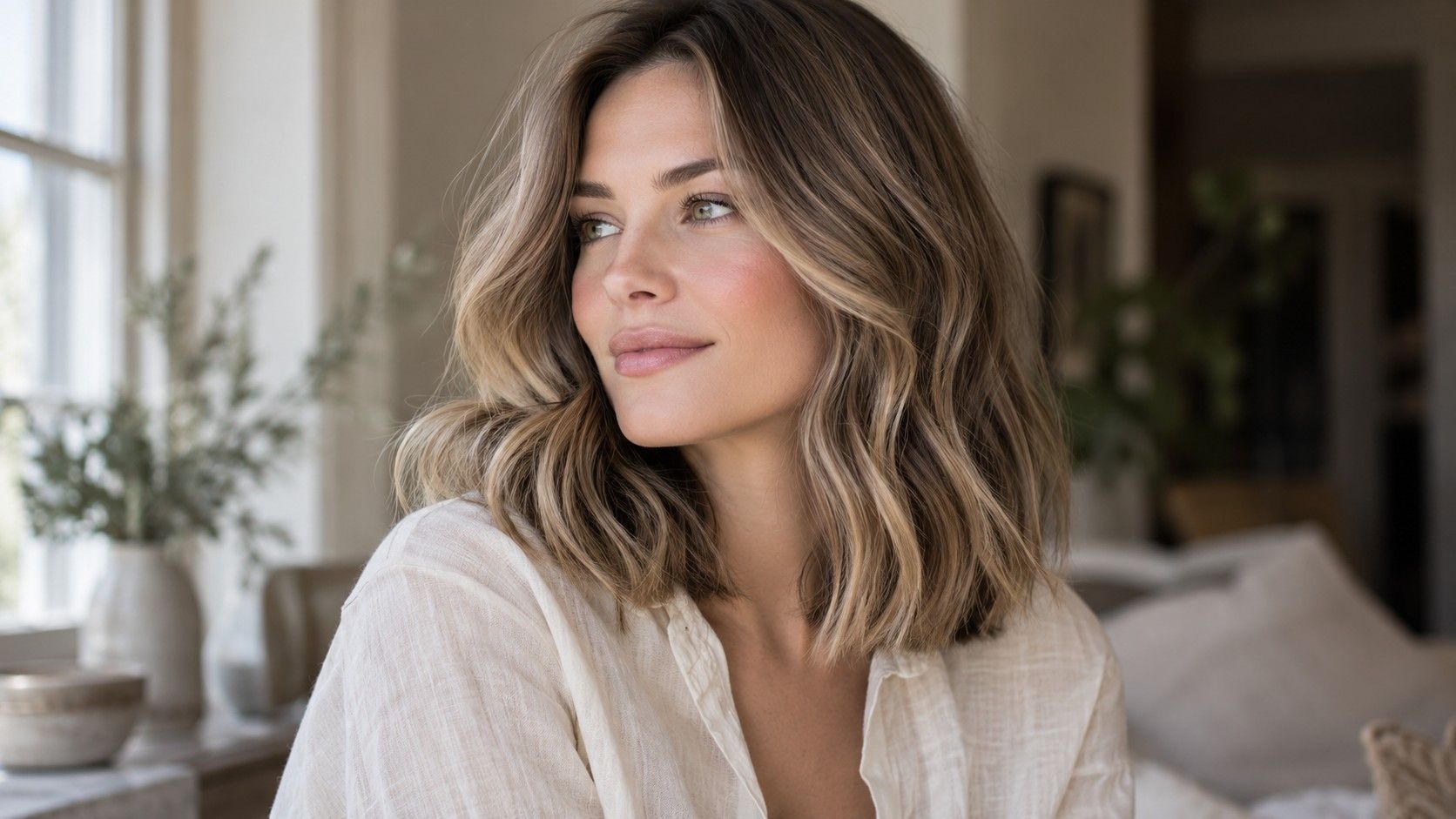
Soft Summer hair colors are often presented as a collection of dusty blondes and mushroom browns. The pictures are appealing, but they can hide an important difference: a muted impression may come from the shade, the gentle placement of highlights or simply the lighting. You do not have to make your hair visibly grey to explore this direction. I would begin with the amount of contrast you enjoy around your face, then compare a soft brunette, a neutral mushroom brown and a subdued blonde at a realistic depth. The seasonal label can organize a shortlist without deciding your appearance for you.
When mushroom brown looks chic in one picture and muddy in another
Mushroom brown is a descriptive name, not a universal salon formula. One reference may show a neutral brown with fine cool highlights; another may have a distinctly grey or taupe reflection. Before saving either, look at the hair nearest the face and the deeper areas underneath. Decide whether you like the overall depth or the greyed finish. Those are separate requests.
Compare the picture with a plain neutral brown at a similar lightness. If the mushroom version seems dull beside your face, you may prefer less ash while keeping the same depth. If the neutral version seems too warm, a cooler reflection may be the quality you want. There is no need to take the most muted interpretation to prove that a palette applies to you.
Watch for backgrounds that reinforce the effect. Beige walls, grey knitwear and low-contrast editing can make hair appear quieter than it would next to a bright shirt in daylight. Crop the picture down to the face and hair, then judge again. A colorist can help translate the resulting preference into a possible finish on your starting hair.
Bring an example of mushroom brown that goes too grey for your taste. A boundary picture makes “soft, but not flat” easier to explain. It also gives the consultation something concrete to compare when two attractive swatches seem nearly identical under the salon lights.
When you like your brunette depth and only want it softened
A Soft Summer interpretation does not require becoming blonde. A brown base with a gentle reflection and restrained variation through the lengths can keep the familiar frame around your face. This may appeal if you like the relationship between dark brows and darker hair but find strong red or golden highlights distracting.
Look for brunette references where the lighter pieces sit fairly close to the base in depth. The change can be visible in movement without forming obvious pale stripes. Ask whether your inspiration depends on highlights, an overall tone change or the shine of freshly styled hair. A photograph alone often makes these different approaches look surprisingly similar.
You can also choose where to keep depth. A darker area beneath the crown or through the lower layers may give the shape more definition, while small lighter sections near the parting add variation. The right balance depends on your haircut and your own preference. A very short cut and long layered hair will reveal the same placement differently.
I would show the colorist a normal photograph of the hair without a curled finish. That makes it easier to discuss what will remain visible on an ordinary day. If the idea only appeals with large polished waves, check whether you also enjoy it on the straighter or less styled hair you actually wear.
When muted blonde removes more definition than you expected
A subdued blonde can be cool beige, a deeper ash blonde or a softly pearly mixture. It can also be too light for the contrast you prefer, even when its tone looks attractive. Put a pale muted blonde reference beside a darker blonde with a similar reflection. Focus on the forehead and brow area before looking at the ends.
If the deeper option feels more comfortable, keep that depth as the starting point. Lighter strands can still create movement without changing the entire frame. A root that is closer to your natural color may help preserve definition, but ask whether it would be left natural or created with additional color. The upkeep is not necessarily the same.
Softness can come from transitions rather than extreme coolness. A neutral beige blonde with fine, blended pieces may feel gentler than a visibly silver blonde divided into bold sections. Tell the colorist which of those qualities matters most. Otherwise a request for “soft ash blonde” can turn into a discussion of tone while the placement stays unresolved.
If your lengths already contain older lightening, mention where they look pale or feel different from the rest. Those areas may influence what can be done next. A fresh reference image cannot show the condition or history of your hair, so leave room for a darker or more gradual version of the idea.
When fine highlights disappear or chunky ones take over
Low-contrast color still needs enough variation to be visible. Very fine pieces close to the base may disappear in an indoor photograph, while broader sections can make a much stronger pattern than the same shade suggests on a swatch. Decide whether you want an almost even impression or a noticeable ribbon of lighter color.
Check the reference at the roots as well as the ends. Closely spaced highlights can produce a broadly lighter appearance, even when each individual piece is delicate. More space between them leaves more of the base visible. Ask the colorist to explain that balance in the picture instead of choosing by a technique name alone.
Your texture changes the pattern. A lighter ribbon may wrap around a curl, break across layers or form a continuous line on straight hair. Bring examples with a similar texture when possible. If the images all show hair unlike yours, explain the effect you like rather than expecting the same visual arrangement.
Consider the hairline separately. Pale pieces beside the face can look strong even when the rest of the color is subtle. You might prefer a softer transition there and slightly more light through the ends. Try your usual parting and an occasional tied-back style during the consultation so the design is discussed in both positions.
When a soft palette starts feeling like a restriction
Seasonal analysis is a styling framework with different interpretations, not a test that proves which hair colors you must wear. Soft Summer is often associated with relatively muted, cool-leaning colors, but that description does not establish your ideal blonde or brown. Personal preference can remain the deciding factor.
Compare references in indirect daylight with a plain top and a neutral background. Avoid a strong warm lamp directly above your face or a colored wall beside it. A phone camera can still alter exposure and white balance automatically, so treat small apparent differences cautiously. The aim is to identify a broad preference, not measure your skin through a screen.
Next, look at the shades with your everyday wardrobe. A quiet mushroom brown may feel harmonious beside muted blue but less familiar beside bright red. You may like that stronger contrast. If the palette advice asks you to abandon clothes and makeup you enjoy, keep the useful vocabulary and relax the rest.
I would write one sentence about the desired effect: “I want subtle variation but recognizable brunette,” or “I want blonde without a very pale hairline.” That is a practical request. It leaves more room for a result you enjoy than asking the colorist to make you look like a particular season.
When you need to judge upkeep before choosing the shade
A muted cool finish can shift as the color changes, and the result depends on the starting hair, previous work and routine. A deeper soft brown and a heavily lightened ash blonde may share a palette board while requiring very different work. Ask what change is likely between appointments on your particular hair, rather than assuming every muted shade grows out gently.
Natural roots also deserve a clear answer. Find out whether the design leaves them untouched, adds a root color or places highlights close to the scalp. Each can create a soft-looking finished image. Ask how the transition is expected to look later, especially along your usual parting and around any visible grey growth.
Bring an accurate account of previous color and lightening, including at-home work. Agree on the lightest areas you want and how much salon maintenance you can realistically repeat. If the proposed routine sounds demanding, choose a closer-to-base option before committing rather than hoping the upkeep will become easier.
Your final shortlist only needs a few pictures: one for depth, one for reflection and one for blending. Mark the detail that matters in each. Soft Summer hair colors work best as a set of choices about brown, blonde and contrast; you can make those choices without chasing the exact filtered shade on someone else’s head.